

The importance of power generators and load banks for data centers
Data centers are essential for businesses, storing critical information that, if lost, can cause significant damage. To ensure continuous operation, it’s crucial to have power generators working alongside UPS systems, providing energy in case of grid failures. Choosing the ideal generator involves analyzing type, size, fuel, and location, with options ranging from 750 kVA to 1000 kVA. Preventive maintenance and regular testing with load banks are essential to ensure the proper functioning of backup systems.
Power Quality: How to Prevent Losses in Your Industry
The Federal Government recommends using generators to protect industries against fluctuations and interruptions in power supply. Poor power quality can lead to significant losses, including equipment failure, production loss, and additional costs. A stoppage of just 2 minutes can cost up to R$ 135,000, while a 1-hour interruption can reach R$ 750,000. Installing backup generators is essential to keep production stable and avoid financial losses.
The use of technology in the development of new engines
Technological innovations boost the national industry, making it increasingly competitive against major international players. The power generator industry is no exception. Since the 1970s, when the country’s infrastructure investments encouraged the use of generators, advancements in the sector have been increasingly significant.
Diesel power generator: advantages and applications
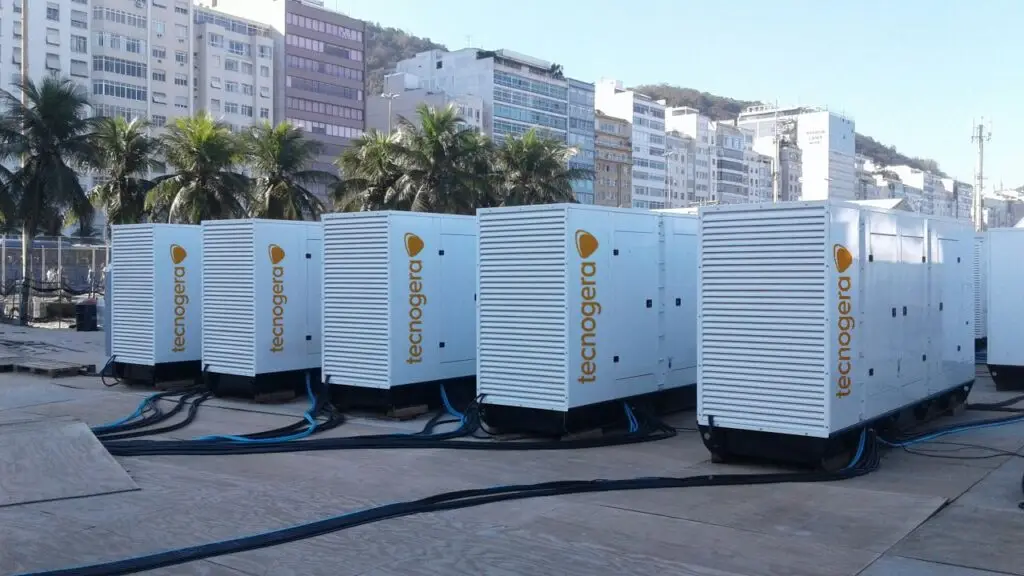
The choice between diesel or natural gas generators depends on various factors such as efficiency, operational cost, and operating conditions. While diesel generators offer higher energy efficiency (36-41%) and lower cost per kWh, gas generators are less polluting and do not require fuel storage. The decision should consider the intended use, whether for emergencies, construction, or continuous operations, as well as aspects like maintenance and environmental impact.
May has a red tariff flag
Lower than expected rainfall at the start of the year led the National Electric Energy Agency (Aneel) to activate the red tariff flag (level 1), which will be in effect throughout May. This means an additional charge of R$ 3.00 for every 100 kWh of energy consumed.
Renewable Power Generation: How It Works

The renewable power generation market is expanding in Brazil, with wind and solar sources taking the spotlight. The country has 167 wind farms and 74 solar plants under construction, with wind energy expected to become the country’s second-largest source by 2020. Wind generation grew by 61.5% in the first two months of 2017, producing 3,495 average MW. Tecnogera is active in the sector, providing commissioning and load bank supply for plants, ensuring quality and safety in performance testing.
Growth in energy consumption boosts temporary power generation market
The 2.5% increase in energy consumption in the country reflects the recovery of the Brazilian industry, which relies on energy as a primary input, representing up to 40% of costs. To cut expenses, companies are turning to temporary power from generators, which can save up to 30% during peak hours. Tecnogera offers comprehensive solutions with…
How load banks are crucial in commissioning wind and solar plants
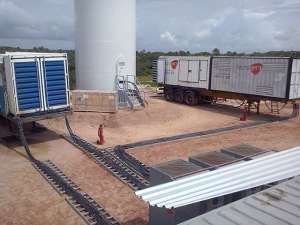
Brazil has a variety of electrical resources based on renewable energy, meeting a constantly growing demand in the domestic market through these sources. Despite the economic crisis, the sector showed significant expansion and surpassed unfavorable statistics: according to Aneel’s Power Generation Information Database (BIG), in the coming years there will be an addition of 10,576,347 kW to the country’s power generation capacity from the 169 projects currently under construction and another 271 projects with construction not yet started in the wind and solar sectors. According to the Ministry of Mines and Energy, the goal is to increase the share of renewable sources in Brazil’s energy matrix by 23% by 2030, in order to meet the commitments made during the United Nations Climate Change Conference (COP-21). An assessment by the Energy Research Company (EPE) indicated that the reduction in the domestic supply of oil and derivatives contributed to a greater share of the renewable energy sector to meet demand. As a result, Brazil will reach the milestone of 1 Gigawatt in installed capacity in photovoltaic solar power plants by 2017.
Pre-salt production record boosts temporary power market
At the beginning of March, the National Agency of Petroleum, Natural Gas and Biofuels (ANP) announced that in January, pre-salt production hit a record, totaling over 1.5 million barrels of oil per day. This result meant that production from pre-salt wells accounted for 47% of Brazil’s total output.
Opportunities for Temporary Power in Construction
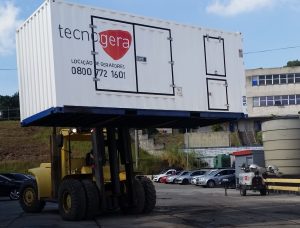
The years 2015 and 2016 were quite challenging for the construction industry. With the country’s recession deepening, high property inventory, and a large number of apartment and house returns to builders, the market experienced a slowdown.