Brazil has a variety of electrical resources based on renewable energy, meeting a constantly growing demand in the domestic market through these sources.
Despite the economic crisis, the sector showed significant expansion and surpassed unfavorable statistics: according to Aneel’s Power Generation Information Database (BIG), in the coming years there will be an addition of 10,576,347 kW to the country’s power generation capacity from the 169 projects currently under construction and another 271 projects with construction not yet started in the wind and solar sectors.
According to the Ministry of Mines and Energy, the goal is to increase the share of renewable sources in Brazil’s energy matrix by 23% by 2030, in order to meet the commitments made during the United Nations Climate Change Conference (COP-21). An assessment by the Energy Research Company (EPE) indicated that the reduction in the domestic supply of oil and derivatives contributed to a greater share of the renewable energy sector to meet demand.
As a result, Brazil will reach the milestone of 1 Gigawatt in installed capacity in photovoltaic solar power plants by 2017.
A level recorded in just over 20 countries, the large production capacity of solar plants brings benefits to the population as a whole, since, based on official data from the National Electric Energy Agency (ANEEL), photovoltaic solar systems installed in homes, businesses, industries, public buildings, and rural areas represent more than 99% of these distributed microgeneration and minigeneration installations in the country.
Homes are the most benefited consumer units with solar systems, with an average consumption of 77% of the energy produced, and there was a recorded interest of 72% of Brazilians in generating solar energy, reiterating the interest and potential of this segment.
Next, commerce benefits with 17% of consumption, and industry ranks third with 2%, showing strong growth potential, which stimulates the sector with investments and development.
Wind farms also showed robust activity in 2016, with a 53% increase in production.
Through BNDES, the Federal Government invested over R$ 18 billion in wind energy alone from 2003 to 2015, and the expectation is that 291 parks will be built by 2020 across Brazil.
The state of Piauí stands out for its growth potential and plans the installation of over 2,000 wind energy towers.
During the implementation of a plant, electrical commissioning is the crucial step before operations begin, as it involves checking, testing, and evaluating the operation of machines and installations, in their components or as a whole, to allow their use under normal operating conditions.
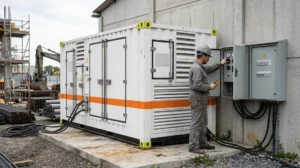
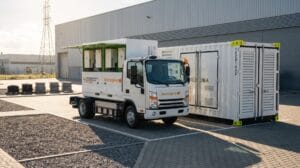
For this test to be conducted, a load bank is necessary, a device that enables the uninterrupted and reliable production of energy.
It is used to test power sources to prevent failures in the activation of generators and other equipment.
The supply of load banks occurs when the plant’s generating unit is ready, but there are still details missing in the electrical part.
For example, the medium voltage cabling part is not ready, and the load bank solution covers this part, allowing commissioning to occur.
The use of load banks in large projects like plant construction ensures safe performance of the equipment, avoiding losses and keeping newly acquired machinery in perfect condition and at maximum usage capacity.
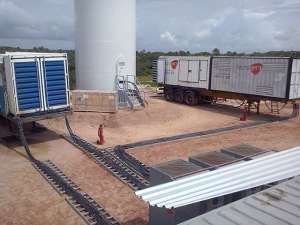
In the case of wind and solar plants, load banks allow for simulating GRID energization, identifying problems, and testing the plant’s capacity before actual energization.
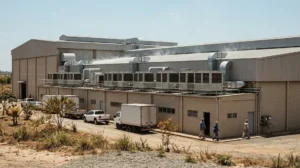
Commissioning at the wind plant directly tests the wind turbines, and at the solar plant, the load bank tests the power sources and converter units.
This way, it is possible to enter the commissioning phase already generating energy commercially.
Moreover, any system failure must be identified and corrected to prevent future accidents and avoid losses during the initial operation stage. It is important to have an experienced supplier in providing load banks, and Tecnogera has proven expertise in temporary plants up to 100 MW and to meet complex projects that require technical capacity and structure.
To ensure the perfect functioning and maximum performance of these load banks, in addition to preventive maintenance, Tecnogera also conducts performance tests on each load center for rental, such as real load services.
Committed to quality service for its partners, we have a highly skilled team and equipment from the best national and international brands, kept in constant modernization to ensure greater operational safety, time optimization, and cost savings.