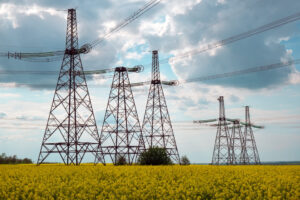
The power tower is a robust metal structure essential for the efficient and safe transmission of electricity over long distances, forming the backbone of the power transmission system.
These large constructions are responsible for supporting the conductor cables, ensuring the necessary insulation and a safe distance from the ground.
From the various types of power transmission towers to the height of the power tower, their construction involves precise engineering to handle the complexities of electrical power distribution. They are designed to withstand adverse weather conditions, ensuring supply continuity and the safety of the energy infrastructure.
Understanding the different functions and characteristics of these structures is crucial to appreciating the work that ensures energy reaches our homes and industries.
In this text, we will explore how these towers are built, the materials used, and their vital role in the infrastructure that lights up our daily lives.
What are the types of power towers?
Power towers are classified according to their function and the type of mechanical stress they endure in the transmission line. Each model is designed for a specific need, ensuring the efficiency and safety of the electrical grid.
This variety is essential for adapting the distribution of electrical energy to different terrains and conditions.
The choice of power transmission tower type directly impacts the height of the power tower and its metal structure. Engineers carefully calculate which design is most suitable, considering factors such as line routing, cable load, and prevailing winds.
This decision optimizes both costs and the performance of the power transmission system.
Next, we will detail the main types, showing how each contributes to the robustness and reliability of the electrical system.
Suspension Tower
The main purpose of the suspension tower is to support the conductor cables on straight sections of the line, without significant deviations. It functions by allowing the cables to pass “suspended” by insulators, primarily countering the vertical weight of the conductors.
This is the most common type, comprising the majority of power transmission towers on long lines.
Its main features include a lighter metal structure compared to other types, as it doesn’t need to withstand large horizontal traction forces.
The height of the suspension power tower can vary, but its simplicity makes it ideal for flat and continuous sections, serving as a pillar of the electrical grid.
Terminal Tower
The terminal tower is used at the beginning and end of transmission lines, or in substations, where the conductors need to be robustly secured. Its purpose is to withstand the full traction force of the incoming and outgoing cables. This is one of the strongest power towers.
This metal structure is designed to withstand very high traction forces, acting as an “anchorage” for the cables. Generally, they are larger and more robust, with deeper foundations to ensure stability. The height of the terminal power tower is strategic to accommodate connections.
Tension Tower
The tension tower is employed at points where there are changes in the transmission line direction, crossings (such as rivers or roads), or in very long sections that require segmentation.
Its purpose is to absorb and distribute the traction forces of the conductors. These power transmission towers are essential for maintaining line integrity.
Functioning as an intermediate anchorage point, the tension tower allows cables to be tensioned in sections, facilitating maintenance. Its metal structure is robust, similar to the terminal, designed to withstand both vertical and horizontal forces, fundamental for the electrical grid.
Transposition Tower
The transposition tower has the specific function of crossing phase cables in a transmission line. This is done to balance the impedances of the conductors along the route, optimizing the efficiency of electrical energy distribution.
Typically, this type of power tower has a more complex design.
This metal structure has arms and insulators arranged to allow the inversion of the relative positions of the cables. This ensures that each phase has the same effective length of exposure to the magnetic field, minimizing losses and improving energy quality.
The height of the transposition power tower is adapted to the need.
How do power transmission towers work?
The operation of power transmission towers is central to the journey of electricity from its generation to the end consumer.
The process begins at power plants, where energy is generated and then elevated to high voltages by transformers to minimize losses during transport.
It is at this point that the power transmission system comes into play.
Power towers play the role of supporting the conductor cables at a safe height, isolating them from the ground and any obstacles.
They form the skeleton of the electrical grid, allowing electricity to travel hundreds or even thousands of kilometers to distribution substations.
After traversing the lines supported by the towers, the energy is again transformed to lower voltages at substations, making it suitable for electrical energy distribution to homes, businesses, and industries.
Without power transmission towers, the efficient large-scale transport of electricity would be unfeasible.
What are the materials and structures of power towers?
The materials and structural designs of power towers are chosen to ensure maximum strength, durability, and efficiency. The main material used in the construction of the tower’s metal structure is galvanized steel, known for its high mechanical strength and exceptional corrosion protection.
The galvanization process, which involves coating the steel with zinc, significantly extends the tower’s lifespan, even in harsh environments.
In addition to steel, other components, such as aluminum, are used in the conductors and fittings, and concrete is essential for the foundations, providing the necessary stability for the height of the power tower.
Regarding structural designs, the most common are lattice towers, which consist of interconnected bars forming triangles, optimizing load distribution and offering a good cost-benefit ratio.
Another design is the tubular, which uses hollow steel poles, with a cleaner aesthetic, often employed in urban areas or where space is limited.
The choice of design and materials directly influences the load capacity, ease of maintenance, and visual impact of the power transmission tower on the electrical grid.
What is the environmental and visual impact of power towers?
Power towers are prominent elements in both urban and rural landscapes, generating a significant visual impact due to their height and extensive reach, altering the environment’s aesthetics and the perception of the surrounding space.
In natural areas, the installation of new transmission lines may require clearing strips of land, altering ecosystems and local wildlife habitats. This is one of the challenges of electrical energy distribution.
Companies in the power transmission sector strive to minimize these impacts with careful planning. This includes choosing routes that avoid areas of high environmental or cultural value, using existing infrastructure corridors whenever possible.
The metal structure of the towers can also be designed to better integrate.
Measures to reduce impact include reforestation in degraded areas, environmental monitoring, and the use of more compact designs or technologies that reduce the need for easements.
The goal is to balance the need for energy with environmental preservation and landscape appreciation, a fundamental commitment for the electrical grid.
Maintenance and lifespan of power towers
Regular maintenance of power towers is essential to ensure the reliability and safety of the power transmission system.
Inspection procedures involve visual and detailed checks of the metal structure, foundations, insulators, and cables, looking for signs of corrosion, wear, or damage.
These inspections can be carried out by ground teams, drones, or helicopters, ensuring the coverage of the electrical grid.
Maintenance challenges are intensified in remote or hard-to-reach areas, where transporting equipment and teams is complex. In such cases, logistics must be carefully planned, and technologies like remote sensors are increasingly used to continuously monitor the integrity of power transmission towers.
The average lifespan of a power tower can range from 50 to 80 years, depending on the quality of materials, maintenance rigor, and environmental conditions.
Factors like severe corrosion, extreme weather events, or lack of proper maintenance can reduce it, while preventive maintenance and the use of high-quality materials can extend it, optimizing electrical energy distribution.