Power is one of the most critical aspects of organizing large events, yet it’s often one of the most overlooked.
A power failure can cause anything from minor inconveniences to a complete event shutdown.
This guide covers the essential steps to ensure a stable and secure power supply, including choosing the right supplier, properly sizing generators, correct installation, and contingency planning.
SIZING AND PLANNING
The first step is to calculate the amount of power needed for the event.
To do this, add up the power requirements of all equipment to be used, including lighting, sound, kitchen, air conditioning, and more.
It’s crucial to add a safety margin of at least 20% to 30% over the total calculated.
Also consider the possibility of expansion or last-minute equipment additions.
CHOOSING THE SUPPLIER
Choosing the temporary power supplier is crucial for your event’s success.
Opt for companies with proven experience in large-scale events and that offer 24-hour support.
Check if the company has modern, well-maintained equipment and offers preventive and corrective maintenance.
INSTALLATION AND DISTRIBUTION
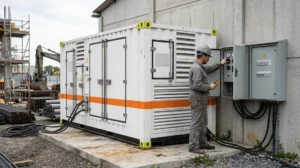
The installation of generators should be carried out by qualified professionals, following safety standards.
Cables must be suitable for the required power and protected against physical damage.
It’s advisable for wiring to be out of public reach and signposted when necessary.
CONTINGENCY PLAN
Always have a Plan B.
In addition to the main generators, consider hiring a standby generator in case the main equipment fails.
Keep enough fuel for the entire event period, considering possible delays.
MAINTENANCE AND SUPPORT
Check if the supplier offers technical support throughout the event.
Generators should undergo preventive maintenance before being installed.
Have a technician available on-site to quickly resolve any issues that may arise.
SAFETY
Generators should be installed in a safe location, away from pedestrian areas and protected from weather conditions.
All equipment must be grounded, and electrical panels should be restricted to technical staff access.
SUSTAINABILITY
Opt for more efficient and less polluting generators.
Some companies offer biofuel options or hybrid systems that reduce environmental impact.
SUCCESS AND FAILURE CASES
Events like Rock in Rio and Rio de Janeiro’s Carnival are examples of how good power planning is essential.
On the other hand, power supply failures have caused embarrassments at music festivals and sporting events worldwide.
FINAL CHECKLIST
- Calculate total power needed
- Add a 20-30% safety margin
- Choose a reliable supplier
- Check equipment maintenance
- Have a standby generator
- Maintain sufficient fuel
- Hire 24-hour technical support
- Prepare a contingency plan
- Ensure installation safety
- Consider sustainability
By following these recommendations, you’ll be prepared to ensure a stable and secure power supply for your event, avoiding issues that could compromise your production’s success.