Many professionals in the industrial and infrastructure sectors use the terms generator and generator set interchangeably, but technically they represent different concepts. While one refers to the machine that performs energy conversion, the other refers to a complete and autonomous system.
Understanding this distinction is crucial for planning energy security, ensuring that the equipment choice meets load requirements and operational continuity. Below, we detail each concept to assist in your technical decision-making.
What is an energy generator
In isolation, a generator is a device capable of converting mechanical, chemical, or other forms of energy into electricity. It is the electronic or mechanical component that serves as the heart of a larger system, responsible for producing the electrical flow.
In industrial contexts, the term generally refers to the alternator, which uses the principle of electromagnetic induction to provide current. It is just one piece within a set aimed at energy security of a project or industrial installation.
How electrical energy generation works
The operation is based on Faraday’s Law, where the movement of a conductor within a magnetic field induces an electric current. In the energy generator, this movement is generated by an external force that makes the rotor spin continuously.
This process transforms mechanical work into electrical power, which can be distributed to panels and machines. The efficiency of this conversion depends on the quality of internal materials, such as copper coils and the thermal insulation system.
To ensure the produced energy is stable, the generator uses voltage regulators to maintain constant voltage. This stability is crucial to avoid damaging sensitive equipment connected to the generator network, whether for business or industrial applications.
Main types of generators
There are various generator models on the market, classified by the type of current they produce, with alternators being the most common for high power. They generate alternating current (AC), which is the standard used in most electrical networks and motors.
Another type is dynamos, which produce direct current (DC), although their large-scale application has decreased with technological advances. The choice of model depends on the need for load distribution and the specific purpose of the industrial project.
We can also classify generators by their primary source, such as wind, hydraulic, or solar, which have distinct mechanisms. However, in backup and emergency systems, the focus is on models that operate integrated into a motor-generator system.
What is a generator set
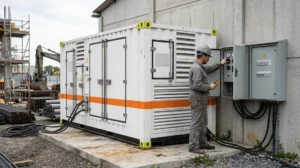
Unlike the isolated component, the generator set is the assembly of various equipment that forms a complete power plant. It is designed to operate independently of the public grid, combining the mechanical power source with electrical generation.
Knowing what a generator set is involves understanding that it has all the necessary items to function within seconds after a power failure. It is a ready-made solution that includes everything from fuel storage to control and protection systems.
Components of a generator set
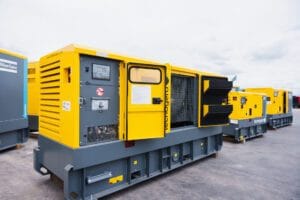
A standard system consists of a combustion engine, an alternator, a control panel, and a structural base. The engine is responsible for providing the mechanical energy needed for the alternator to produce the required electricity.
Additionally, the set includes cooling radiators, starter batteries, and gas exhaust systems for safe operation. The energy generator, when assembled in this group, becomes a highly robust tool for continuous use.
The control system is the brain of the machine, monitoring parameters such as oil pressure and temperature in real-time. This integration is what allows for system automation, activating the equipment as soon as it detects a drop in the main grid.
How the complete system works
Understanding how a generator set works reveals that the engine burns fuel (diesel or gas) to rotate the alternator shaft. This rotary motion triggers magnetic induction, producing the energy that will be used by the company or establishment.
The automatic transfer switch (ATS) manages the alternation between the utility grid and the generator set safely. This prevents energy from returning to the external grid and ensures that operational continuity is maintained without interruptions.
The system operates cyclically, where the panel monitors the load and adjusts the engine’s acceleration to maintain frequency. This balance is essential for electrical safety and the durability of all internal components of the group.
Main differences between generator and generator set
The significant distinction lies in the complexity and autonomy of each solution presented to the energy market. While the generator is just a part of the whole, the generator set is the complete package ready to deliver immediate electrical power.
In professional daily life, generator rental almost always refers to the rental of complete and enclosed generator sets. This technical difference directly impacts installation, maintenance costs, and field implementation agility.
Individual equipment vs. complete system
The generator alone cannot start autonomously, as it requires an external engine to drive it mechanically. The generator set, however, has its own engine, allowing it to operate anywhere, even in completely remote areas.
This independence makes the generator set the ideal solution for those seeking energy security in locations without infrastructure. The individual equipment is more common in machine factories that assemble their own systems or in power plants.
By opting for the complete system, the infrastructure manager ensures that all components are compatible with each other. This avoids mechanical sizing errors that could compromise energy generation efficiency in the long run.
Applications and energy capacity
Individual generators are frequent components in renewable energy systems or large hydroelectric plants for power conversion. The generator for businesses in the form of a generator set is focused on emergency backup and load support.
The capacity of a generator set is measured in kVA (kilovolt-ampere), allowing it to power anything from small businesses to large industrial parks. They are designed to withstand high demands from starting electric motors and heavy compressors.
In situations where the public grid is unstable, using multiple generator sets in parallel increases system resilience. This configuration ensures that energy is available 24/7, mitigating risks of unscheduled shutdowns.
Installation and use in industrial projects
Installing an isolated generator requires a complex mechanical engineering project for coupling and cooling. On the other hand, the enclosed generator set is designed for “plug and play” installation, requiring only electrical connections and fuel.
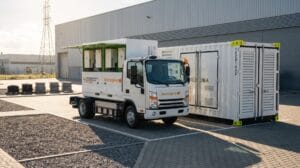
In industrial projects, quick mobilization is a differentiator that favors the choice of mobile generator sets. They can be positioned as needed on the site, facilitating the logistics of temporary power in large construction sites.
Where generator sets are most used
The versatility of generator sets allows them to act as a primary or backup source in various economic segments. They ensure that sensitive processes are not interrupted by external failures, maintaining productivity.
Whether in urban areas or hard-to-reach locations, the use of generators protects against financial losses caused by blackouts. The rental market has grown precisely to meet these specific demands with agility and technical efficiency.
Industries and factories
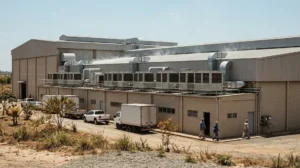
In the manufacturing sector, a power outage can result in raw material loss and severe damage to production machinery, not to mention workforce idleness. The generator set acts as a protective barrier, quickly taking on the load to keep the entire operation running smoothly.
Many industries use these devices during peak hours, when energy is more expensive, to reduce electricity bill costs. This energy management strategy allows for significant savings, using fuel as a cheaper source at specific times.
Market data shows that investing in self-generation increases companies’ competitiveness in the global scenario. Having a reliable energy source from generators is a differentiator that ensures meeting deadlines and supply contracts.
Hospitals and data centers
In environments where lives depend on connected devices, the presence of a generator is legally mandatory. Hospital generator sets must have ultra-fast start systems to avoid fluctuations in ICUs and surgical centers.
Data centers are also intensive users of this technology, as data loss due to power outages is unacceptable. In these locations, energy redundancy is planned with multiple groups operating in sync to ensure total system availability.
Construction
Construction sites often start activities even before the arrival of the definitive electrical grid from the utility company. Generator rental provides the necessary power for cranes, mixers, and power tools throughout the foundation and structure phase.
The robustness of the equipment allows them to operate under sun and rain, facing the dust and vibrations common in construction. The use of a mobile generator set facilitates moving the power source as the construction progresses on the site.
Besides the operational part, these generators illuminate the site for night shifts, increasing property security and the speed of the work. It is a flexible solution that adapts to the schedule and scale of each real estate or infrastructure project.
Events and temporary infrastructure
Large shows, festivals, and sports events require immense electrical loads that the local grid rarely can supply alone. The generator set is used both to power stages and sound and to serve as a total security backup.
In these cases, reliability is the determining factor, as any failure can ruin the audience’s experience and incur fines. Modern generator rental ensures that the audience is not disturbed by engine noise during performances.
The assembly of temporary infrastructures, such as field hospitals or command posts, also depends on this mobile energy. The ease of transport and connection of modern generator sets allows these structures to be activated in record time.
How to choose the ideal solution for your operation
Deciding among the various models of generator for businesses requires a thorough analysis of total load and usage profile. Incorrect sizing can lead to excessive fuel consumption or the inability to support starting peaks.
It is advisable for an electrical engineer to conduct a needs assessment to recommend the best generator set. Considering the installation environment and local regulations is also part of a conscious and safe technical choice.
Energy demand assessment
The first step is to sum up the power of all equipment that needs simultaneous energy in Watts or kVA. It is crucial to consider the starting current of motors, which is higher than the nominal current of operation.
Sizing the system only by average consumption can cause the generator to shut down due to a momentary network overload. Using an industrial energy generator with a safety margin ensures operation with maximum efficiency and safety.
Analyzing whether the load is linear or non-linear influences the choice of alternator and electronic regulation system. For heavy electronic loads, the system must be able to filter noise and maintain voltage stability.
Operation time
The choice changes if the equipment is used only for emergencies or will operate continuously in remote locations. Generator sets for stand-by use are designed for short periods, while those for continuous use have more robust engines.
Understanding how a generator set works in prime or continuous mode helps predict necessary maintenance intervals. Equipment that operates many hours a day requires a much more rigorous and planned fuel and lubricant logistics.
For temporary operations, such as construction or events, generator rental is the most financially advantageous option. This allows the company to always have a revised and suitable machine for the exact duration of that specific activity.
Necessary infrastructure
The installation site of the generator set needs adequate ventilation for cooling and gas exhaust. Additionally, the ground must be leveled and capable of supporting the weight of the assembled set on its base.
Access for supply trucks and maintenance teams must be free to avoid stoppages due to lack of supplies. In urban areas, compliance with acoustic zoning laws is a requirement for generator installation.
Protection against weather is provided through silenced metal enclosures that protect the system’s sensitive internal components. Investing in the correct infrastructure prolongs the equipment’s useful life and ensures the safety of surrounding employees.
Tecnogera’s energy generation solutions
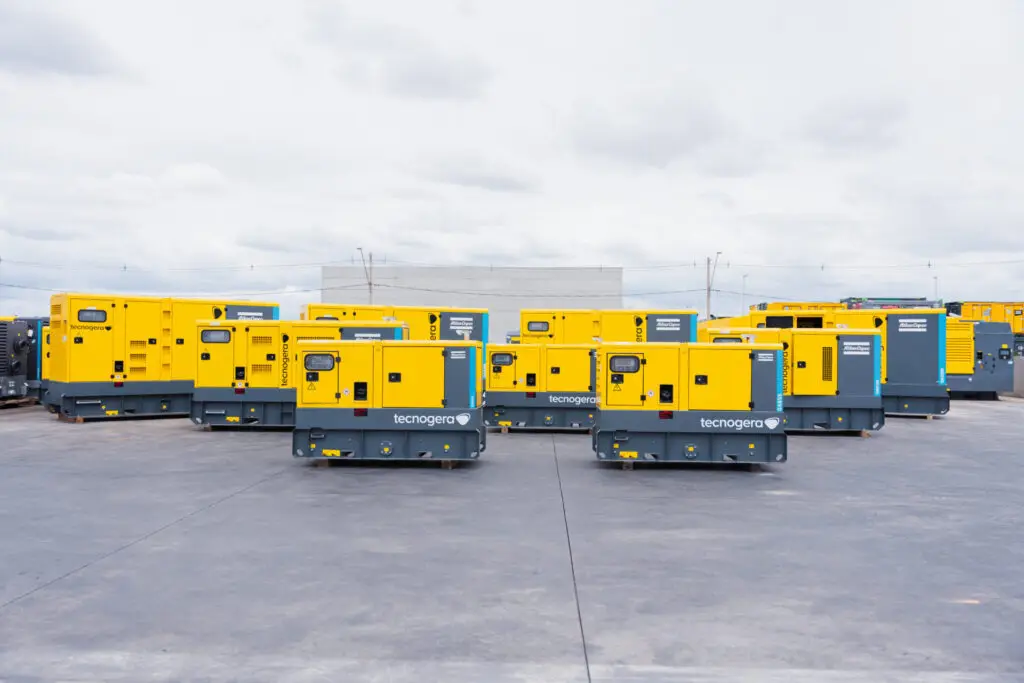
Tecnogera is a national company and a market leader, offering cutting-edge technology in generator sets for various economic sectors. With a focus on energy security, the company delivers complete solutions that ensure the continuity of its clients’ businesses.
Through a modern fleet and rigorous maintenance processes, Tecnogera stands out for the reliability of its equipment. The goal is to provide energy efficiently, reducing operational costs and environmental impacts in each project served.
Generator set rental
Generator rental at Tecnogera offers total flexibility for companies to adjust their power according to actual demand. This model eliminates the need for high initial investments and fixed costs with maintenance and machine storage.
Clients have access to state-of-the-art equipment equipped with telemetry systems for remote performance monitoring. Having a rented generator set means having the assurance of quick support and replacement in case of technical eventuality.
Besides financial savings, renting ensures that the company uses machines with high-efficiency electronic engines. This translates into lower diesel consumption and greater compliance with corporate sustainability and responsibility goals.
Customized energy projects
Each client has unique challenges, and that’s why Tecnogera develops customized projects that integrate generators, transformers, and accessories. This consultative approach ensures that energy for businesses is delivered optimally for each specific application.
Whether for a large industrial complex or a national-scale event, the engineering team studies the best technical configuration. The use of parallel generators and synchronization systems are examples of advanced solutions offered to ensure total redundancy.
The focus on turn-key solutions allows the client to focus on their core activity, leaving energy management to specialists. Tecnogera takes care of everything, from load sizing to the physical and operational installation of equipment on site.
Specialized technical support
One of Tecnogera’s pillars is 24/7 technical support throughout the national territory. This prompt response ensures the energy security of critical operations that cannot suffer unforeseen interruptions.
Qualified technicians perform constant preventive maintenance to ensure that each fleet equipment is in perfect working condition. The deep knowledge of mechanics and electricity makes the company team a strategic ally in large projects.
Besides repair, support includes operator training and constant monitoring of fuel and load levels. Providing peace of mind through a service of technical excellence is the commitment that drives Tecnogera in the market.