Aerial platforms are essential equipment for working at heights, ensuring safety and efficiency across various operations. To maintain optimal performance and operator safety, aerial platform maintenance is crucial.
Understanding the different types of maintenance and their benefits is vital for any company relying on these machines.
This content covers the importance of maintenance, the types available, and how Tecnogera, a leader in energy and safety solutions for height work, provides comprehensive support for its clients. We’ll explore everything from the benefits of timely maintenance to regulatory standards like NR 18 that govern the use of these machines.
Why is aerial platform maintenance important?
Mobile Elevating Work Platforms (MEWPs), commonly known as aerial platforms, are designed to lift workers and their tools to various heights. They safely and efficiently replace traditional methods like scaffolding, being essential in sectors such as construction, logistics, and events.
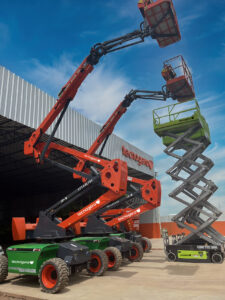
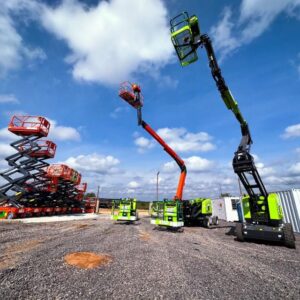
There are different types of platforms such as:
Scissor lift
The scissor lift elevates through crossed metal arms that expand and retract vertically. This system ensures strictly upward and downward movement, offering a wide and stable base.
Its features include vertical elevation and a spacious platform, ideal for heights under 20 meters, with excellent load capacity, exceeding 450kg in some models.
It’s used in maintenance, construction, logistics, and events. Benefits include safety, efficiency, and sustainability of electric models, distinguished by purely vertical elevation.
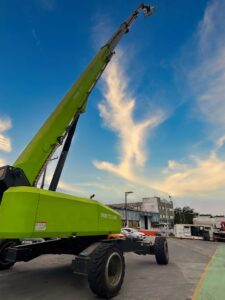
Telescopic boom lift
The telescopic boom lift operates with a straight boom that extends linearly to reach the work point, ideal for maximum vertical and direct horizontal reach.
Its operation is simple, with controls in the basket. Key features include impressive reach, with some models exceeding 50 meters in height, robust structure, and often 4×4 drive.
Common in large constructions and maintenance of bridges, viaducts, and central spans, like shopping centers. The main benefit is quick access to very high or distant points, distinguishing it from articulated types by superior linear reach.
Mast lift
The mast lift, or vertical mast lift, elevates along a single mast, ideal for confined spaces. Its compact base allows easy positioning.
Features include compact design, reaching moderate heights, generally up to 14m, with a smaller platform for one operator. It’s applied in light maintenance in warehouses and retail. The benefit is access to restricted areas, distinguished by being compact and offering only vertical elevation, without significant horizontal reach.
The choice of type depends on the specific application and work environment.
Neglecting maintenance can have serious consequences. According to industry data, accidents related to inadequate maintenance are a leading cause of incidents in height work, resulting in serious injuries and even fatalities. Operator safety is directly linked to equipment condition.
What are the types of maintenance for aerial platforms?
Performing maintenance on aerial platforms for height work is essential for both operator safety and efficient, excellent work.
Maintenance can be categorized into: preventive, corrective, and predictive.
Preventive maintenance
Preventive maintenance of aerial platforms involves a set of scheduled actions to prevent failures and extend equipment lifespan. This includes regular fluid checks, electrical component inspections, and safety system tests, ensuring everything functions as expected.
Typical procedures involve lubricating moving parts, tightening bolts and nuts, calibrating sensors, and scheduled replacement of naturally worn components. This proactive care minimizes the risk of unexpected downtime and ensures compliance with safety standards.
The recommended frequency for preventive maintenance varies by model, usage intensity, and operational environment, but is generally semi-annual or annual, or based on hours of use. Maintaining a strict schedule is vital for energy and operational safety of the equipment.
Corrective maintenance
Corrective maintenance is triggered when a failure or breakdown has already occurred. Tecnogera, for instance, when renting aerial platforms offers quick technical support to handle these situations, minimizing downtime and restoring functionality swiftly.
Common issues requiring corrective maintenance include hydraulic system failures, electrical problems, excessive tire or track wear, and structural damage from impacts. Speed in diagnosis and repair is crucial for resuming operations.
Predictive maintenance
Predictive maintenance uses advanced technologies to monitor equipment condition in real-time, predicting potential failures before they occur. This is done through sensors, data analysis, and remote monitoring, allowing for planned and efficient interventions.
Tecnogera also implements this approach in its services, using cutting-edge technology in its fleet of 100% electric platforms. Continuous monitoring optimizes equipment use, reducing emergency repair costs and increasing availability.
What are the benefits of maintaining aerial platforms?
Keeping aerial platforms well-maintained offers numerous benefits. Firstly, it enhances operator safety, preventing accidents and ensuring a safer work environment. It also avoids fines and legal issues from non-compliance with standards.
Moreover, regular maintenance extends equipment lifespan, optimizing investment and reducing the need for frequent replacements. Well-maintained equipment operates more efficiently, saving fuel or energy and boosting task productivity.
Tecnogera facilitates routine maintenance for those who rent its platforms. With a 100% electric and modern fleet, clients receive new, ready-to-use equipment, with preventive maintenance included and specialized technical support for any eventuality, as part of the aerial platform service offered.
How is aerial platform maintenance performed?
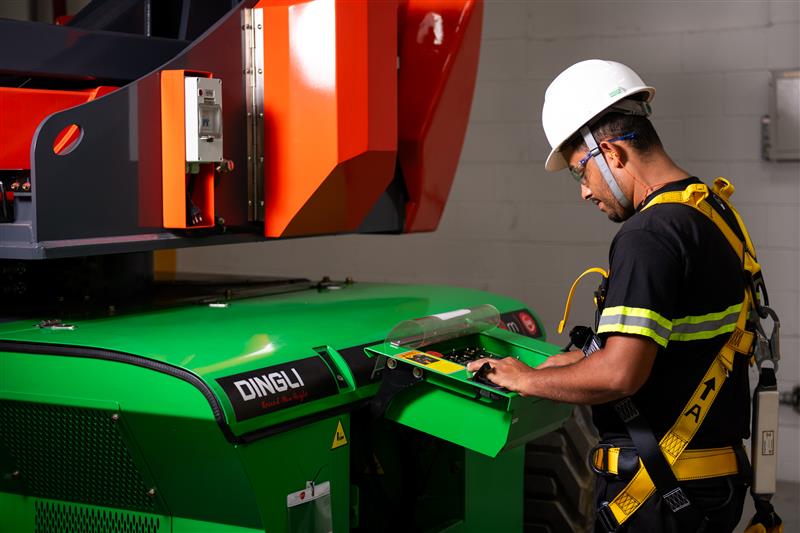
Aerial platform maintenance involves a series of essential steps to ensure proper functioning and safety:
- Detailed visual inspection: check the structure, tires, hoses, cables, and connections for signs of wear, damage, or leaks.
- Fluid check: verify levels and quality of hydraulic oil, battery fluid, and other lubricants.
- Safety system testing: assess the operation of emergency stop buttons, overload sensors, alarms, and safety locks.
- Electrical component inspection: check cables, connectors, battery, and control panel to ensure no shorts or wear.
- Lubrication: apply lubricants to moving parts to reduce friction and prevent wear.
- Operational tests: conduct elevation, rotation, and movement tests to ensure all functions operate correctly and smoothly.
Components requiring special attention in aerial platforms
Aerial platforms are complex systems, with various components needing attention during maintenance.
Hydraulic system
This system is vital for movement and elevation, composed of cylinders, hoses, valves, and pumps. Leaks or pressure drops are warning signs.
Electrical system
Responsible for controlling all machine functions, including panels, wiring, sensors, and batteries. Failure signs include warning lights on the panel, control malfunctions, or battery charging issues. In electric platforms, the health of the lithium battery is critical.
Mechanical system
The mechanical system covers the metal structure, joints, axles, and tires. It’s crucial to check for cracks in the structure, tire wear, and excessive play in the joints. Any abnormal noise or irregular movement may indicate a serious mechanical issue requiring corrective maintenance for aerial platforms.
Signs your aerial platform needs maintenance
Being alert to warning signs is extremely important to avoid problems and enhance safety. Check out the main signs:
Abnormal noises
Abnormal noises include squeaks, knocks, or hisses from the engine or hydraulic system. These sounds may indicate component wear, fluid leaks, especially hydraulic oil, and are a clear sign that something is wrong and needs immediate attention.
Irregular movements
Movements like shaking, difficulty in raising or lowering the platform, or slow response to commands suggest failures in the hydraulic system or controls. Electrical issues may manifest as control panel failures, warning lights on, or engine start difficulties.
Reduced battery autonomy
In electric platforms, significant reduction in battery autonomy or excessive charging time indicates the battery may need replacement or maintenance.
Ignoring these signs can lead to critical failures and jeopardize operator safety. Stay alert!
What does NR 18 say about aerial platforms?
Regulatory Standard 18 (NR 18) establishes the conditions and work environment in the construction industry, addressing safety in the use of aerial platforms. NR 18 requires that platforms be operated by qualified workers and undergo preventive maintenance of aerial platforms regularly.
The standard highlights the need for daily inspections before use, in addition to periodic maintenance by qualified professionals. Item 18.14.24.8 of NR 18, for example, states that “equipment for moving materials and people must undergo preventive and corrective maintenance, according to manufacturer recommendations and applicable technical standards”.
Additionally, NR 18 requires that equipment have safety devices to prevent accidental movement, and that all safety items be tested before each use. Non-compliance with these requirements can result in fines and activity suspension.
Rent aerial platforms with maintenance guaranteed by Tecnogera
Tecnogera stands out in the aerial platform rental market by offering a 100% electric fleet, with modern, high-tech equipment.
With over 2,500 machines available, Tecnogera ensures its clients have access to top-notch equipment, with rigorous maintenance and specialized technical support.
Our clients enjoy the peace of mind knowing that preventive maintenance of aerial platforms is a priority, minimizing risks and maximizing productivity. Choosing Tecnogera means opting for safety, efficiency, and innovation in your height work.