According to data from the Brazilian Association of Infrastructure and Basic Industries (Abdib), Brazil is expected to reach a record investment in infrastructure by 2026, with a projected total of R$ 300 billion. A portion of these investments will come from large-scale projects, particularly in sectors like energy, sanitation, transportation, and data centers.
The increase in large-scale projects demands solutions that combine high performance with complete protection for workers. Working at elevated heights presents technical challenges that require equipment capable of overcoming obstacles with surgical precision.
Often, conventional equipment does not meet the necessary standards for complex construction or severe industrial maintenance. Therefore, choosing robust technology is the key to ensuring productivity and meeting integrated schedules.
What is a 51-meter Aerial Platform?
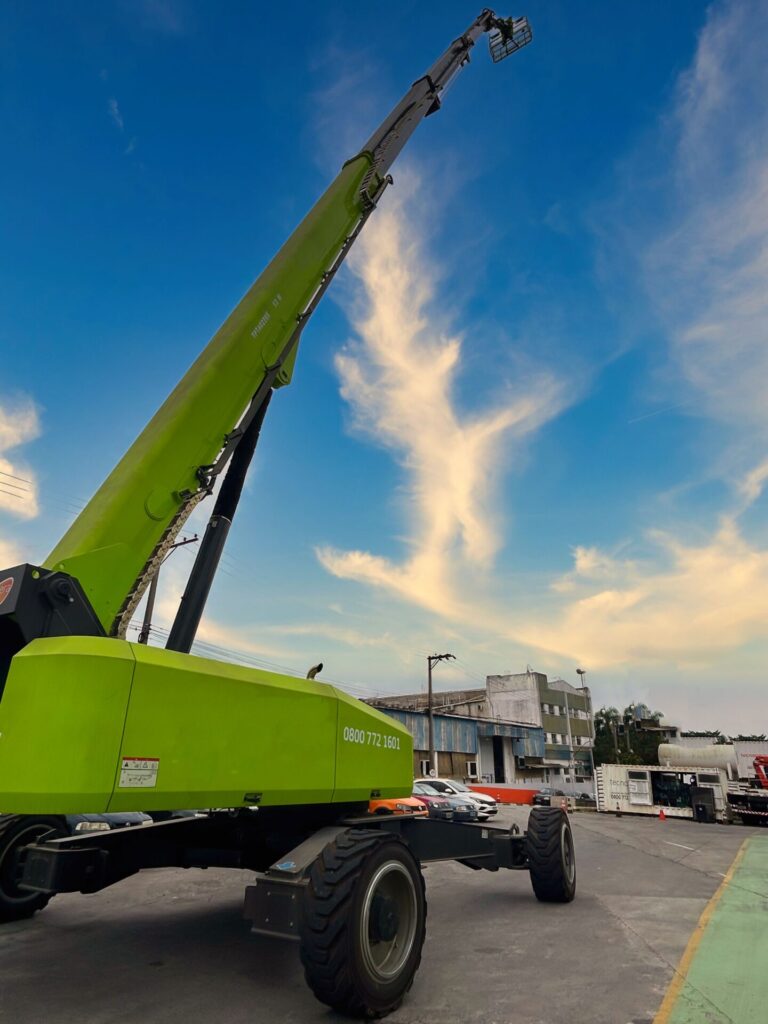
The 51-meter aerial platform is a large-scale piece of equipment designed to reach extreme heights in hard-to-access locations. To give a real sense of this reach, this height is equivalent to a 15-story building, allowing for agile and safe vertical operations.
Unlike medium-sized models, these machines have reinforced stabilization systems and advanced technology to withstand winds and load variations. They are essential when the distance between the ground and the intervention point requires vertical reach and stability.
This type of equipment uses highly sensitive electronic controls to ensure the exact positioning of the basket. This feature is crucial to avoid collisions with sensitive structures, maintaining the integrity of the assets and the safety of professionals operating the platform.
Main Types of High-Reach Aerial Platforms
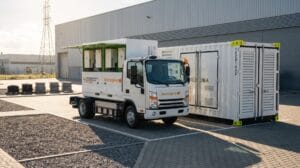
Technological innovation has brought modern systems to the market, such as the Battery Energy Storage System (BESS), allowing platforms to operate with clean energy. This is beneficial for use in industries and data centers where gas emissions are not allowed.
The application of lithium batteries ensures that the equipment maintains work autonomy during extended shifts without interruptions. Additionally, hybrid models offer versatility to move between indoor and outdoor areas with the same energy efficiency.
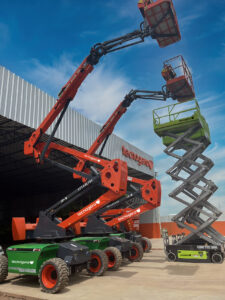
Below, we detail the two main variations of machines that make up Tecnogera’s high-reach solutions portfolio, a company with a fleet of 100% lithium battery-powered aerial platforms. Each model meets a specific need for movement and reach within the construction site.
Telescopic Aerial Platform
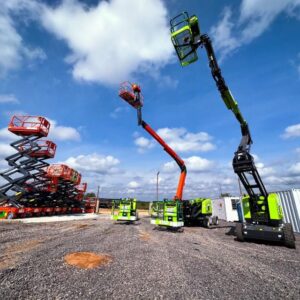
The telescopic model is known for its direct vertical reach and speed in elevation, making it ideal for open spaces without obstacles. Its extendable boom allows reaching the maximum height linearly, optimizing the workers’ ascent time.
Articulated Aerial Platform
The articulated platform stands out for its versatility in overcoming obstacles, allowing horizontal reach and “up and over” positioning. It is the perfect solution for locations where the machine’s base cannot be positioned directly below the work area.
When to Use a 51-Meter Aerial Platform
This equipment is recommended for any work above 40 meters that requires superior stability compared to other solutions like scaffolding. In complex industrial environments, where there are pipelines and fixed structures, this platform becomes the ideal tool for safe access.
Large-scale temporary projects, such as event setups or urban infrastructure, also benefit from this reach for quick installations. The platform’s mobility allows it to be moved as needed, unlike fixed structures that require time to assemble and disassemble.
Hard-to-access locations where the terrain is uneven or has space restrictions on the ground call for powerful articulated arms. The embedded technology ensures that even at heights like a 15-story building, the operator has full control.
Main Applications of the 51-Meter Aerial Platform
In construction, these platforms are essential for facade closures, painting, and glass installation in commercial buildings. The agility in lateral movement significantly reduces the total project time, enhancing safety and cost-effectiveness.
For industrial maintenance and metal structure assembly, the equipment provides the necessary support to carry heavy tools and components. It advantageously replaces the use of cranes in various tasks, whether for electrical or lighting installations.
The infrastructure sector also uses these machines on bridges, viaducts, and telecom towers for detailed inspections and quick repairs. Building maintenance on high facades becomes much simpler and safer with the stability of a robust platform.
Advantages of the 51-Meter Aerial Platform Over Other Solutions
The main advantage of this aerial platform model is its greater reach with safety, eliminating the time-consuming assembly of scaffolding that can take days to complete. The equipment’s mobility allows work to begin immediately after proper positioning and stabilization.
With the adoption of these platforms, a significant reduction in operational time has been noted, as workers can ascend and descend as needed. Additionally, ground occupation is much less, freeing up space for other activities.
The use of lithium batteries in modern models provides a low-noise operation, ideal for nighttime or urban work. This technology reinforces the commitment to sustainability and the well-being of professionals and the surrounding community.
Safety in Using Large Aerial Platforms
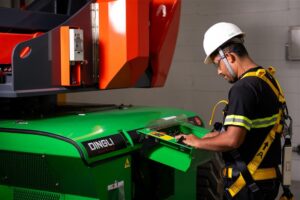
The equipment’s stability is monitored by intelligent sensors that prevent dangerous movements if the ground presents any improper inclination. The use of Personal Protective Equipment (PPE), such as a parachute-type safety harness, is mandatory for all basket occupants.
Operator training is an indispensable pillar to prevent accidents, ensuring that the professional knows how to handle controls in emergency situations. Soil analysis must also be conducted beforehand to support the total weight of the stabilized machine.
Compliance with standards ensures that operations occur without risks to the team and schedule. Devices like the anti-crush sensor are essential to preserve physical integrity in environments with many beams and obstacles.
Technical Standards and Regulations
The NR-18 establishes the conditions and work environment in the construction industry, dictating specific rules on platform use. Meanwhile, NR-35 focuses directly on planning activities at heights above two meters.
Compliance with NR-06 ensures that personal protective equipment is appropriate for the risk and in perfect condition for use. NR-01 addresses risk management, essential for the documentation and daily inspection of machines.
Strictly following these guidelines is crucial for the company’s legal safety and the protection of human life on site. Tecnogera ensures that all its equipment is reviewed and fully compliant with current legal requirements.
When to Opt for Renting a 51m Aerial Platform
For temporary projects, renting is the smartest strategy as it eliminates the high acquisition costs and asset depreciation. The rental company ensures reduced operational costs and access to modern fleets that are always technologically updated.
Another advantage is the specialized technical support, offering quick on-site assistance in case of any need for adjustment or maintenance. Including maintenance in the rental contract removes a significant administrative and financial burden from your team.
The flexibility to choose the exact model for each phase of the project allows the company to always have the ideal tool available. Focusing on your business’s core activities is easier when equipment logistics are in good hands.