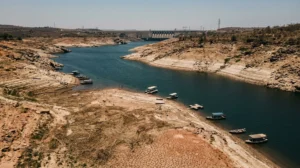
Most of Brazil’s electricity is generated in hydroelectric plants, which are usually located far from major urban centers and the country’s main capitals. With this in mind, have you ever stopped to think about how electricity reaches your home or business?
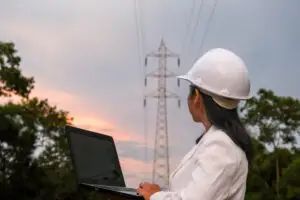
The electricity distribution system is intertwined with the topographical layout of cities, branching out along streets and avenues to connect the generation and transmission system to the end consumer. Energy distributors, regulated by the National Electric Energy Agency (Aneel), receive all the electricity generated at the plants and pass it on through insulated and high-resistance cables.
Before that, however, a transformer increases the electrical voltage of the energy to avoid waste over the hundreds of kilometers that will be traveled before reaching the cities. At strategic points along the way, this electrical energy passes through power substations equipped with transformers responsible for reducing the electrical voltage that will be distributed within urban centers.
To become safe and suitable for consumption, the energy still passes through small transformers — installed on concrete poles — that further reduce the electrical voltage that will reach homes, businesses, and industries through connection branches responsible for the final distribution of energy.
Classification of Transmission and Distribution Lines
In Brazil, distribution networks are classified according to the voltage class they carry:
- A1 – supply voltage equal to or greater than 230 kV
- A2 – supply voltage from 88 kV to 138 kV
- A3 – supply voltage of 69 kV
Class A1 represents the interconnected transmission system, better known as SIN (National Interconnected System). The basic network of the SIN has more than 100 thousand kilometers of transmission lines that distribute electricity throughout the country.
Classes A2 and A3 are the sub-transmission networks, managed by distribution companies that operate with voltages from 69 to 138 kV.