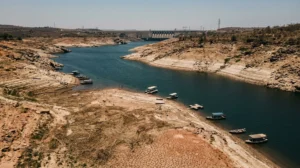
In Brazil, 95% of the electricity that lights our homes is generated in hydroelectric plants, which use the power of water.
However, there are several other types of energy sources.
You know the main ones.
Hydraulic energy
It is the most used in Brazil, due to the large number of rivers.
Hydroelectric plants transform the potential energy of water into kinetic energy, spinning turbines and activating a generator shaft that produces electricity.
Although it is a renewable source, it generates environmental impacts due to the construction of dams.
Solar energy
Despite the high installation cost, it is a clean and renewable source that does not cause much impact on nature.
It uses solar panels to capture the sun’s radiation and then transform it into heat or electricity.
Wind energy
Generates energy from the wind.
For this, it is necessary to install blades in an open area characterized by constant and strong winds.
This wind turns the blades, producing electricity.
Biomass
The decomposition of organic matter — such as wood, sugarcane, manure, food scraps, and firewood — generates gases that are processed in special plants for energy production.
One of the advantages is the low production cost.
Nuclear energy
With the division of the uranium nucleus, a chemical element found in nature, it is possible to obtain a high amount of energy without requiring much space.
This type of energy, however, generates the so-called nuclear waste, one of the most harmful pollutants that exist.
Fossil energy
Uses substances such as oil and coal, formed by the accumulation of organic matter in the soil over millions of years.
Geothermal energy
It is obtained from magma (molten rocks underground), from which steam is obtained to drive electricity-generating turbines.
Tidal energy
The mechanism is similar to that of hydroelectric energy, with the difference that the dam is built to form a reservoir next to the sea.
With the change of tides, the reservoir fills or empties, passing through turbines that generate energy.