Since 2012, the northeastern region of Brazil has been experiencing a severe drought.
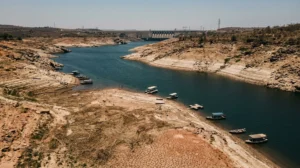
Even though dry periods are quite common, the current scenario is one of the most severe in the last 30 years and affects more than 33 million people, according to the National Confederation of Municipalities.
As a result, the region’s reservoirs, which have the capacity to store more than 10 billion liters of water, are operating at 16.3%.
Five years ago, this percentage was 46.3%.
Data from the National Water Agency (ANA) indicate that out of the 533 reservoirs monitored in the region, 142 are almost dry.
In the state of Ceará, for example, the reservoirs have only 7% of their capacity stored.
With the very low volume of stored water, many reservoirs need to carry out the transposition of their waters to maintain supply or even for the operation of hydroelectric plants.
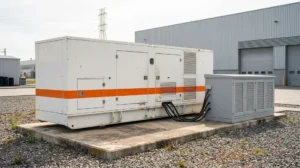
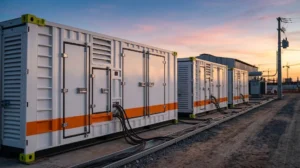
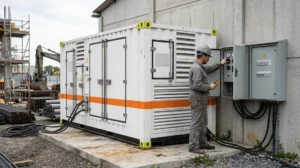
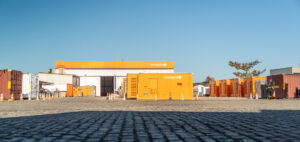
In this process, the use of power generators is essential, as they ensure the operation of the pumps responsible for the withdrawal and transfer of water from the deeper areas of the reservoirs.
An example was the power plant, powered by generators, set up in the Cantareira System in São Paulo during the 2015 water crisis.
Operating 24 hours a day, seven days a week, and for ten months, the plant kept the pumps activated, which carried water from the Atibainha reservoirs in Nazaré Paulista and Jacareí II in Joanópolis to the Cantareira System.