There are specific agricultural productions and agribusiness activities that rely on proper climate control processes for development. Throughout this article, you’ll find insights into this scenario and how to maximize climate control systems for better results.
How Does Climate Control Work in Agribusiness?
Climate control provides the ideal conditions for the development and maintenance of agricultural activities. There are various ways to ensure the correct temperature, often depending on the needs of each type of crop or livestock.
Some of the main methods include:
- Ventilation
- Air conditioning
- Misting
- Temperature control
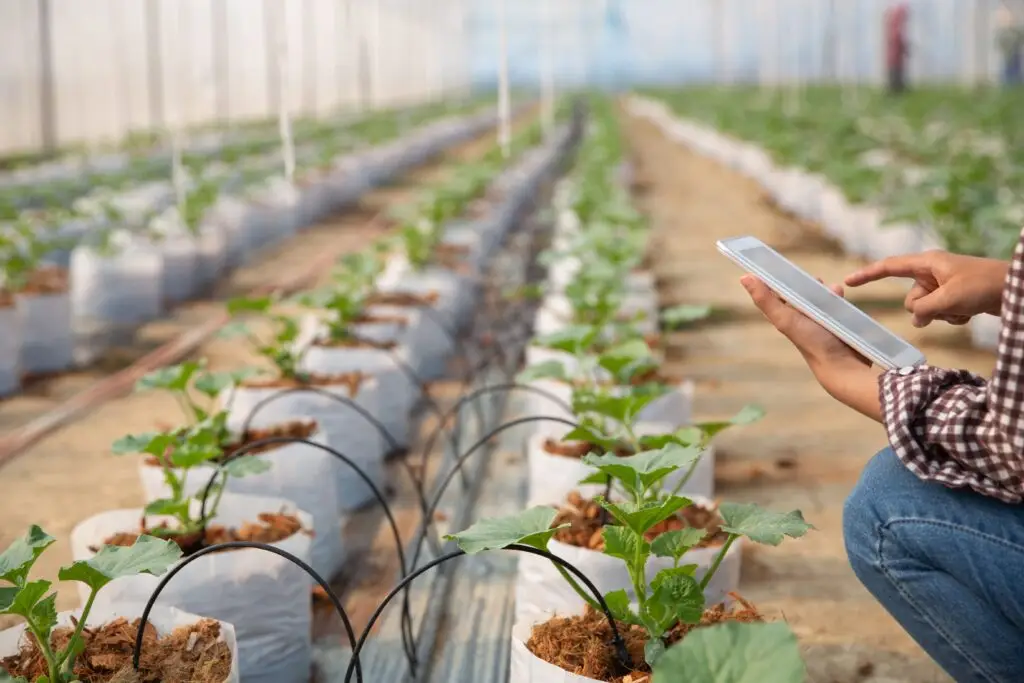
In this last example, using automated control allows for more precise temperature adjustments and efficient monitoring of humidity and ventilation, closely resembling natural environmental conditions.
Here are some agricultural productions that depend on climate control:
- Vegetable greenhouses
- Product storage
- Poultry farming
- Milk and dairy production
Seed Storage Precautions
According to data from Embrapa, seed storage temperatures should not exceed 25°C, and relative humidity should be maintained at 70%.
Considering that seed bags are purchased and stored until planting season, certain precautions are necessary to prevent loss and ensure good germination.
In this case, climate control is essential to achieve the right temperature and keep the seeds intact.
Other precautions, such as storing bags on wooden pallets, keeping them away from walls, not storing seeds with fertilizers or agrochemicals, and maintaining a fungus-free environment, will assist throughout the process.
How to Effectively Implement Climate Control?
Agricultural climate control is effective when production results meet quality conditions and parameters.
Another important point for producers is to avoid harvest losses and minimize impacts that also cause raw material losses.
Continuing our discussion on seeds, proper storage increases their chances of successful germination.
Benefits of Proper Climate Control
By implementing proper climate control in agricultural environments, businesses can reap several benefits. Here are the main ones:
- Better Production Utilization: With the right climate control, productions become more profitable, benefiting the producer.
- Cost Savings and Reduction: By optimizing resources, producers save money, and operational costs are reduced.
- Higher Quality Products: Achieving ideal temperatures allows productions to develop with higher quality.
- Increased Profits: Adjusting the temperature of the environment housing agricultural productions tends to make harvests more advantageous, consequently generating higher profits for businesses.
- Year-Round Cultivation Possibility: Investing in climate control enables the extension of cultivation throughout the year.
This is because, with the right temperature conditions, it is possible to structure plantings and harvests to expand the production flow.
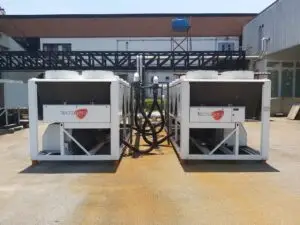
Tecnogera Can Assist You in the Climate Control Process
We understand the importance and impact that investing in climate control can have on the agribusiness sector.
We are in the market for temperature control solutions to meet demands that influence and strengthen work across various sectors, including agriculture.
To control the temperature of the production environment or ensure a profitable harvest, we offer customized climate control solutions, including equipment design and installation.
Want to learn more about our solutions? Talk right now with one of our representatives and discover the ideal solution for your business.