

IAPA Award: Opportunities in the Access Market

The IAPA 2025 awards will be held in Dublin, recognizing innovative companies in the access market across 13 categories. Tecnogera is a finalist in innovative technology and sustainability, focusing on electric aerial work platforms and lithium batteries. The key differentiator is the repurposing of end-of-life batteries for energy storage, creating a cleaner operation. The company introduced the largest hybrid platform in Latin America, reaching 51 meters in height.
Tecnogera introduces a solution for battery disposal and reuse

Tecnogera has developed the Mobile Battery Energy Storage System that repurposes end-of-life lithium cells for temporary power solutions. The system replaces diesel generators, delivering clean, emission-free energy via a 100% electric truck. It was developed with an investment of R$ 1 million and 500 engineering hours, debuting at the 27th Tiradentes Film Festival by providing 1 MWh of clean energy.
Advantages of Lithium Batteries for Aerial Platforms
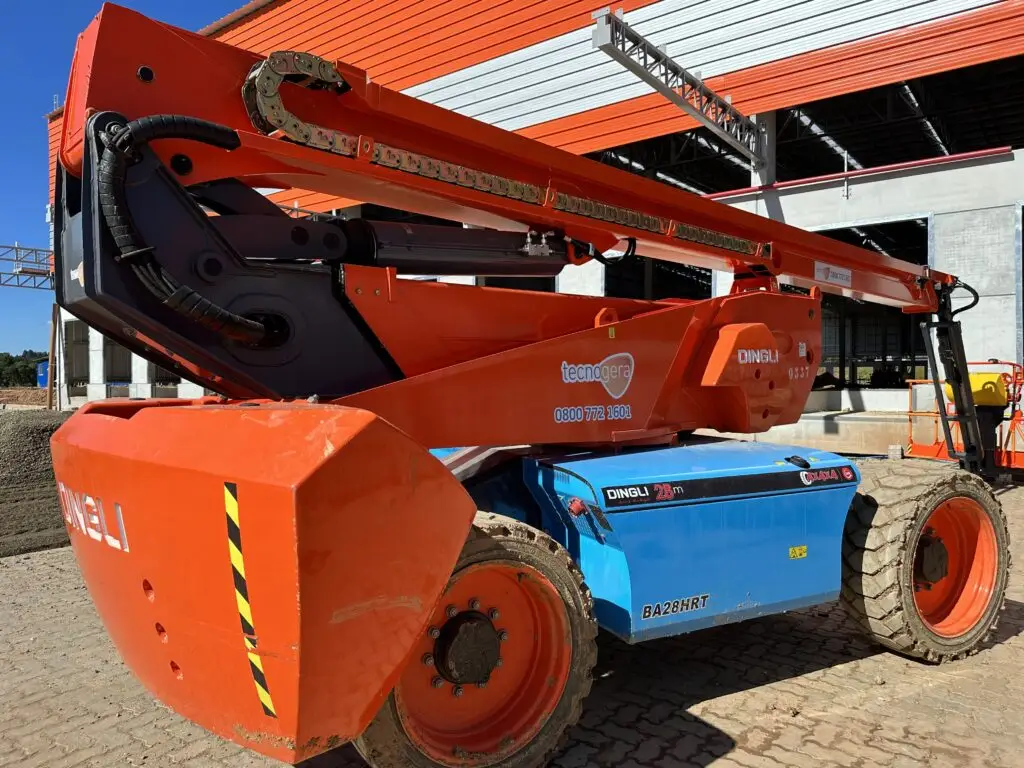
Lithium batteries in aerial platforms offer fast charging, better performance, lower operating costs, and longer lifespan. They provide significant environmental benefits by eliminating pollutant gas emissions, unlike diesel models that emit 2.6 kg of CO2 per liter of fuel. Platforms with lithium batteries allow continuous operation in shifts, short-interval charging, and maximum productivity with sustainability.
Why Use Solar Lighting Towers in Your Operation?
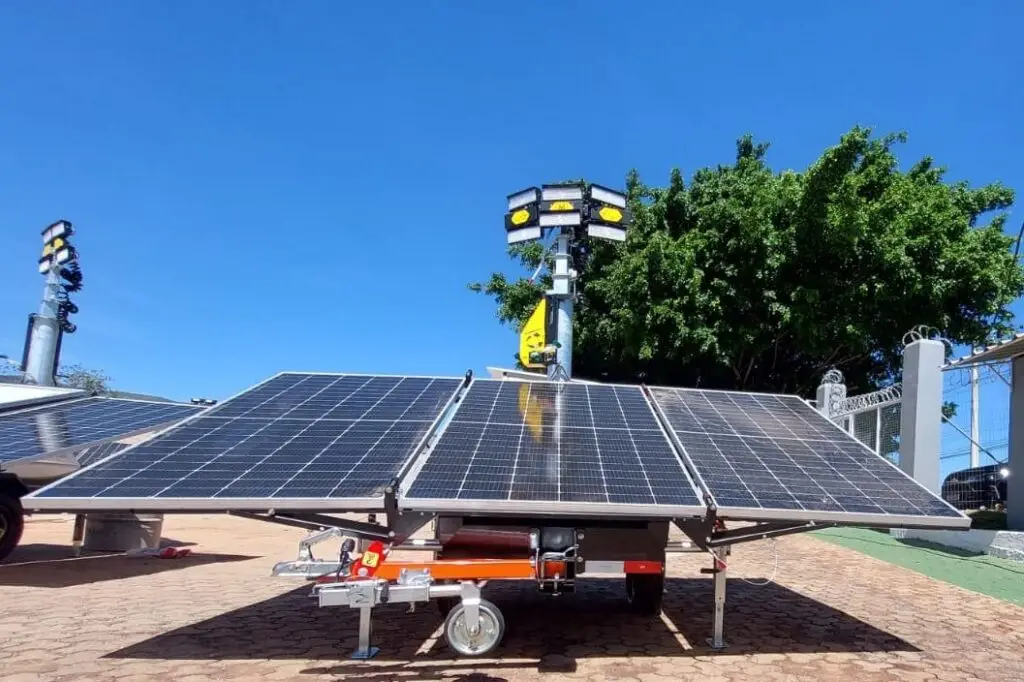
Solar lighting towers harness energy from the sun using photovoltaic panels and store it in battery banks, ensuring autonomy even on cloudy days. They deliver 4,000W of power through LED floodlights, enhancing productivity, safety, mobility, and environmental benefits without emitting pollutants. Ideal for mining, construction, events, agriculture, roads, and various operations requiring large-scale lighting.
Scissor Lift: Operational Agility
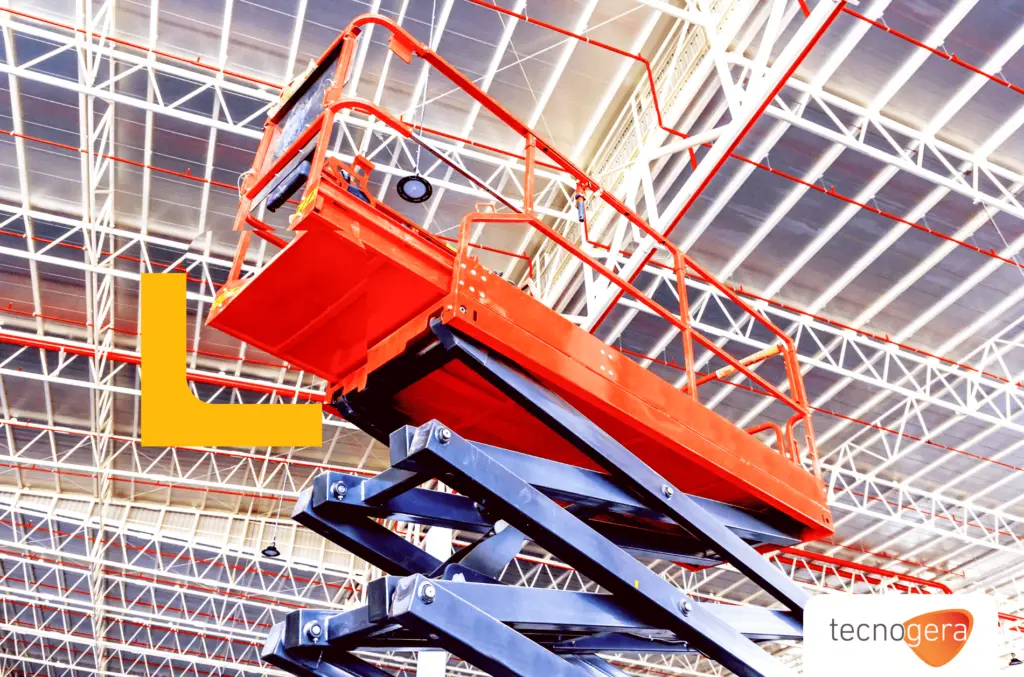
Scissor lifts are vertical elevation equipment designed for indoor tasks up to 20 meters. They’re ideal for renovations, painting, electrical repairs, and maintenance. Electric models offer the same efficiency as combustion ones, with added benefits like indoor use, quick lithium battery charging, and a convenient ‘grab and go’ style.
Energy Transition and Aerial Platforms
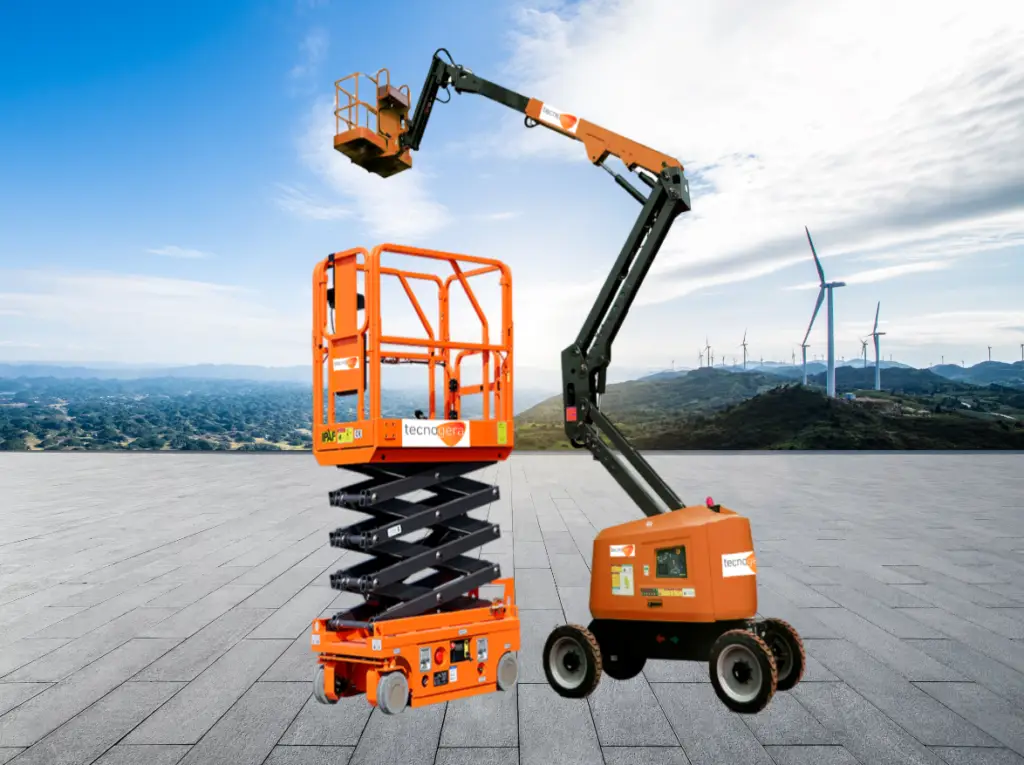
The energy transition encourages the shift from polluting sources to a renewable, low-carbon energy matrix. In the aerial platform market, this shift has led to investment in electric equipment with lithium batteries. These platforms offer the same operational capacity as fuel-powered models, with added benefits such as operation in low temperatures and fast charging.
Industrial UPS vs. Power Generator: Understand the Differences

Both industrial UPS and power generators ensure high-quality electrical supply but operate differently. A UPS uses an internal battery bank that charges automatically, providing almost instant power with limited autonomy, regulating voltage and purity to prevent damaging surges. A generator offers unlimited autonomy as long as it has fuel, is large-scale with high power, ideal for long periods but takes time to reach optimal operation. They can be combined: the UPS acts instantly during failures while the generator prepares, then the UPS shuts down and batteries recharge. This combination completely eliminates interruptions.
Power generator maintenance: types and how to perform
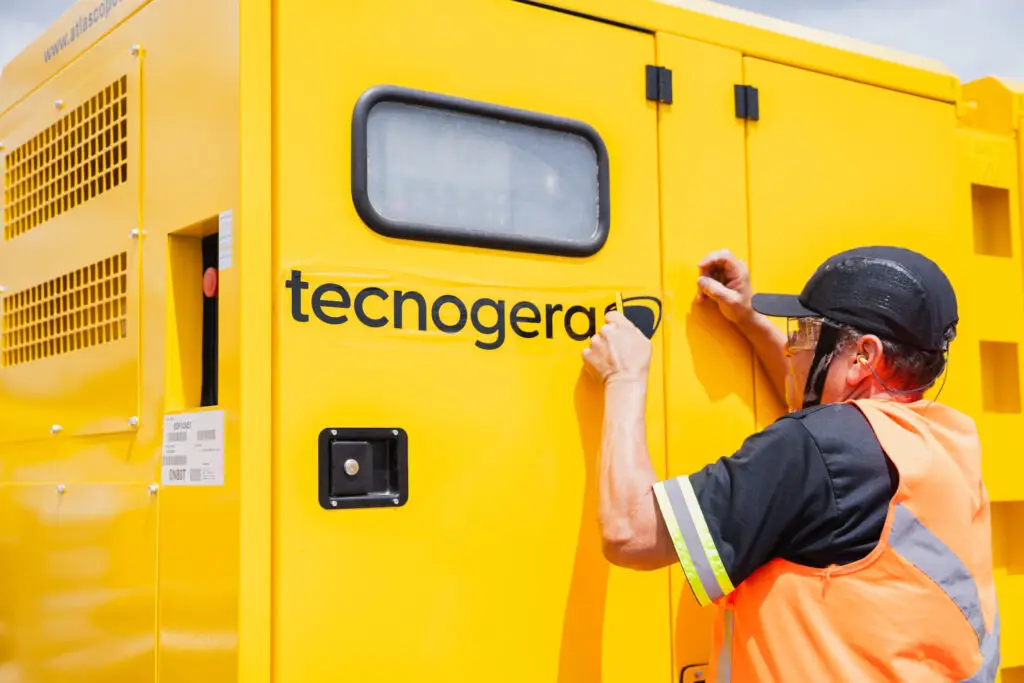
Preventive maintenance of generators is essential to preserve lifespan and ensure performance. Routines divided into specific periods: daily (fuel/oil levels, general inspection), weekly (drainage, battery, filters), monthly (connections, belts, cooling), semiannual (hoses, filter replacement) and annual (complete cleaning). It should only be performed by specialized professionals to avoid irreparable damage.
The Importance of Load Banks for the Data Center Market
The largest data center in the world spans 102,000 m² in Chicago (one of 1,500 in the U.S.). Data centers require uninterrupted power for processing, storage, lighting, and constant climate control. Load banks are essential during commissioning, testing generators, transformers, UPS, batteries, air conditioning systems, and other critical equipment. Tecnogera supplied 3 MVA of power and 6000 MW in load banks for the ODATA data center (R$ 400 million) in Santana de Parnaíba. The Latin American market moved US$ 2.87 billion in 2017 (Brazil: 47.6%), with projections reaching US$ 4.37 billion by 2021, generating high demand for temporary power.
How does a load bank for UPS work?

Anyone working in an office or owning a computer at home has likely heard of a UPS, an uninterruptible power supply that regulates the voltage and purity of the power reaching computers and other electronic devices and industrial equipment connected to it. The load bank for UPS is a system that allows the coupling of resistive electrical loads to power generators or battery banks, ensuring continuous power supply and preventing failures.