Comparison of Backup Energy Systems for Different Applications
While they serve the same purpose, there are important differences in the operation of equipment like the industrial UPS and power generator.
Both an industrial UPS and a power generator are used to ensure high-quality electrical supply for various environments and locations. Understanding the differences between these two pieces of equipment allows for identifying the best application for each, meeting the needs of each situation.
An important point in understanding the differences is that both provide extra protection for the smooth functioning and operation of the business, respecting their characteristics. Having a trusted partner like Tecnogera to deliver the best experience, whether using an industrial UPS or a power generator, is essential for achieving the best results.
Continue following our publication to learn more about the main differences between an industrial UPS and a power generator!
The Importance of High-Quality Electrical Supply
Both the power generator and the industrial UPS are excellent options for ensuring a high-quality electrical supply for various scenarios. An important aspect is to perform the correct sizing to understand the needs of the location, the equipment used, and even the type of displacement required.
A store with an air conditioning system, cash registers for sales, and an inventory management system relies directly on this supply to serve its customers. Any type of failure or interruption will result in a negative experience for the public due to temperatures that go beyond the control of the cooling system.
Having a reliable electrical system is a major concern, whether in a store, industry, commerce, or even for residences. When renting equipment to ensure this supply, the decision should consider different characteristics such as power, type of fuel, or even the choice between a power generator or industrial UPS.
The Main Differences Between an Industrial UPS and a Power Generator
Both the industrial UPS and the power generator will serve to prevent any damage caused by a drop or failure in the local power supply. These pieces of equipment operate differently, serving specific scenarios in various situations where they are employed.
Operation of the Industrial UPS
The UPS provides uninterrupted power to the equipment that makes up the local electrical system in the event of a complete absence or any type of failure or drop. Its main characteristic is being an energy accumulator through the use of a large set or bank of internal batteries.
These batteries are automatically charged while the industrial UPS remains connected to the local utility’s power grid. If there is any fluctuation or drop, they come into operation almost instantly for a certain period of time.
Another characteristic of the UPS is its ability to regulate the voltage and purity of the power reaching electronic and industrial equipment. Thus, it can prevent the well-known power surges that, in many scenarios, can lead to major problems such as the burning or disabling of certain devices. The UPS is ideal for quick service that requires shutdown or scheduled interruption in an appropriate manner.
Operation of the Power Generator
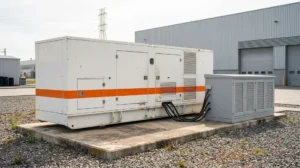
The power generator is recommended for electricity supply in locations that require adequate service such as hospitals, laboratories, hotels, and industries. Its main difference from the UPS is the fact that it has no limitation on its autonomy, as long as the adequate fuel supply is uninterrupted.
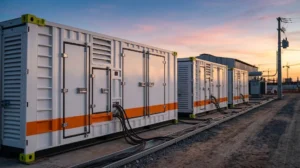
These are large-scale equipment offering high power, whether as the main source of electricity or as an auxiliary in case of a drop or failure. The power generator also has some variations in how it transforms mechanical, chemical, solar, or other types into electrical energy.
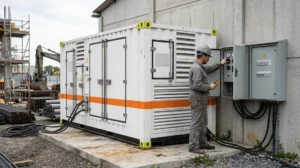
Thus, the power generator is an ideal piece of equipment for long periods of operation, provided there is adequate sizing of the local need. Additionally, it can still be combined with other equipment to form what is known as a generator set, aimed at meeting the specific demands of each client.
Combination of Industrial UPS and Power Generator
These two pieces of equipment can be combined in a generator set so that the location being served has the best experience and never lacks electricity. This type of combination provides the best operation for machines and equipment operating in an industrial scenario.
This type of application works as follows. As soon as an interruption in the main power supply is detected, both the UPS and the generator are activated to support the local electrical system. Due to the inherent characteristic of the power generator relying on mechanical movement, it takes time to reach optimal operating indicators.
The equipment to be powered by the generator would remain off until the generator comes into operation. The UPS does not require this time, being able to operate almost instantly. Due to this time for the generator to start operating, the UPS is the perfect combination for powering the local load.
In the short interval between the drop and the activation of the generator, the UPS comes into operation and provides power through its internal batteries. When the generator comes into operation, the UPS is turned off, and its batteries can return to their initial charge.
Learn more!
The industrial UPS and the power generator serve the same purpose: to ensure a high-quality electrical supply in case of failure or drop in the main system. There are some important differences in their operation, highlighting the importance of knowing each piece of equipment.
Continue following our blog posts and see why Tecnogera is the ideal partner for your business!