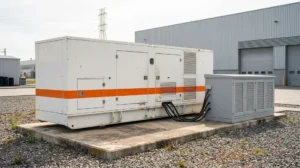
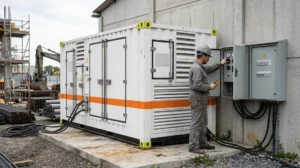
Anyone working in an office or owning a computer at home has likely heard of a UPS, an uninterruptible power supply that regulates the voltage and purity of the power reaching computers and other electronic devices and industrial equipment connected to it.
The UPS can continue powering these devices for a few more minutes after power outages or blackouts occur, preventing a sudden shutdown that could cause irreparable damage to the equipment and even the electrical system in general.
Load Bank for UPS
The load bank for UPS is a system that allows the coupling of resistive electrical loads to power generators or battery banks — in the latter case, being more suitable for operational testing.
Also known as resistive load, the load bank for UPS can be either alternating or direct current and has the capability to operate at low, medium, and high voltage levels.
Load banks for UPS that work with direct current are typically used in battery and UPS testing. Models with alternating current, on the other hand, are recommended for power generators, capable of performing single-phase or three-phase functions and at different voltage levels.
Advantages of a Load Bank for UPS
This device ensures continuous power supply and prevents failures.
The main advantage lies in the preservation of electronic and various equipment, associated with the uninterruptible power supply.
Moreover, by avoiding power surges in sensitive devices, the load bank also prevents significant financial losses or even total equipment loss.