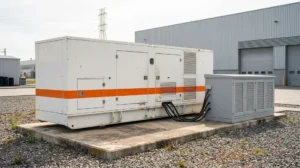
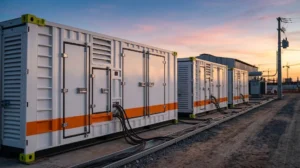
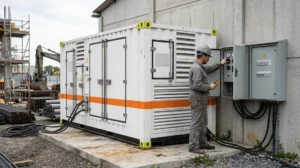
The power generator is equipment that ensures electricity supply independently from the public grid. This means that even during blackouts or public grid failures, places equipped with a power generator are not affected by the lack of electricity.
To operate properly, safely, and quickly, the generator relies on a device called an automatic transfer switch — which acts like a switch connecting a load between two sources. This mechanism enables the generator to supply power if the common supply is interrupted for any reason.
The transfer switch is only activated when one source is absent: if the electrical supply is functioning correctly, the generator remains off, and its operation is only triggered in case of a normal energy flow interruption. This feature ensures both the safety of electrical systems and the efficiency and speed to normalize the energy supply.
Types of Transfer Switches
A generator’s transfer switch can operate in different ways. They are:
Open Transition Transfer Switch
Ideal for emergency systems, as it is only activated after the power supply is interrupted, which is paused for a few moments.
Temporary Transition Transfer Switch
Used in inductive loads, such as UPS systems and frequency inverters.
Closed Transition Transfer Switch
Recommended for locations that cannot have their power supply interrupted even for a few seconds (such as hospitals and data centers). This operation allows the transfer switch to be activated without any pause in the power supply.
Additionally, it is also possible to request a transfer switch standard in a generator according to the equipment’s capacity and the establishment’s demand.