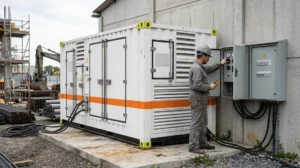
Considered one of the most important devices within a power generator, the transfer switch (also known as QT) functions to maintain safety control, executing various functions that ensure the device’s operation and the consequent energy supply. The transfer switch is indispensable for generator activation, such as immediate switching or interruption of an external electrical signal.
There are different models of transfer switches, such as manual types and automatic open and ramp types. In the first case, the manual transfer switch contains disconnect switches that allow the operator to manually select the power source. The automatic open model, on the other hand, is activated by a microprocessor controller, and the transfer is made by a momentary interruption of the power supply.
Additionally, there is the automatic ramp transfer switch (QTA-R). This model features two electrically interlocked contactors and/or circuit breakers, activated by a microprocessor controller that performs the transfer and retransfer without interrupting the power supply.
Importance of the Transfer Switch
The transfer switch is an essential device for those working with negative pressure, soil irrigation, milking, poultry houses, and other complex activities. The transfer switch (QTA) can also be used in large-scale industries, residences, and buildings, as well as in power generators used in commercial and public and private events.