Importance of Generators in the Healthcare Sector
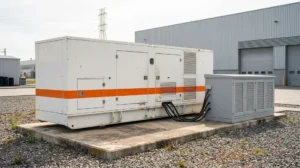
Operating rooms and other essential healthcare loads require backup power in case of main grid interruptions. Everyone knows that when hospitals are not operational due to a grid outage, they endanger the lives of patients, staff, and visitors. If something like a power outage occurs, hospital equipment must keep running because we’re talking about human lives. This is precisely when the importance of backup generators comes into play. When there is a grid power failure, the backup generator automatically kicks in to ensure all loads remain on and functioning.
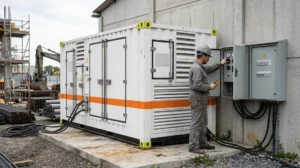
Due to the critical nature of the load, hospital generator sets must be remotely monitored for online tracking, as it must be ensured that these generators will automatically engage in case of a grid failure.
Types of Generators Used
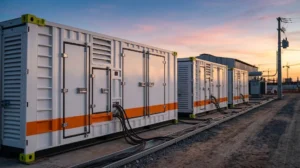
There are two main types of generators used for hospitals. The first is powered by natural gas, which is not commonly used due to its high investment and maintenance costs. The second type of generator, widely used as backup power, is the diesel generator. These generators have the autonomy to operate for an average of 8 hours with their own tank at maximum continuous load capacity. This autonomy is perfectly extended with increased diesel storage.
Monitors, oxygen pumps, and other life-critical equipment may stop functioning. Fortunately, most modern hospitals today have backup power generators. Another concern that comes with power loss is the loss of communications. When the power goes out, most cordless phones do not work. This can restrict people’s communication with emergency services.
Proper Sizing
The sizing of power generator sets is an important part. If backup generators are sized only to power the most critical loads, there will likely be issues with other essential loads, such as elevators, climate control, corridor lighting, among others.
By correctly sizing the generator set capacity, it ensures that all loads, critical and essential, are powered in case of a grid failure. The power generator set can be programmed to engage within seconds in case of an electrical grid failure.
Energy Load Adjustment After Expansions
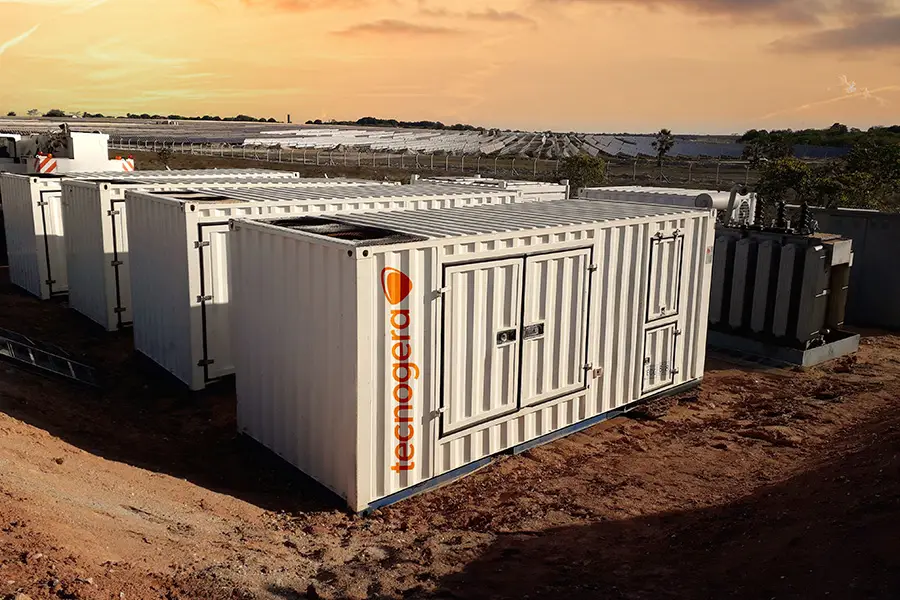
What is not so well known is that, over time, healthcare facilities often open new wings or add new state-of-the-art equipment to better serve patients. In this case, the generator set, initially sized for the original load, may become undersized and no longer able to meet all critical and essential loads. In this case, a contract model that is gaining traction is the backup power rental model. In this contract model, instead of acquiring generator sets, the hospital hires a company to provide all backup power in a rental mode. The contracted company is responsible for technological updates of the generator set, preventive and corrective maintenance, equipment replacement with a higher power unit (expansion), SLA of services established in the contract, provision of remote monitoring, fuel supply, in other words, the company is responsible for the effective delivery of power.
If the hospital has its own generator, it is still recommended to periodically perform a load test through load banks. This will mitigate risks of the generator not engaging in case of a grid failure.
Energy Security in Hospitals
It is important to pay attention to state and municipal regulations for the location of generators. For example, emergency generators need to be protected against floods, earthquakes, and fires, so these requirements generally rule out most basement and rooftop placements.
Anvisa has created a Hospital Environment Safety Manual establishing guidelines for the safe supply of electricity, recommending that, among other details, the transfer of power supply from the utility to the generator set (emergency) be automatic, with a duration of less than 10 seconds. The generator set must serve, at a minimum, patient areas where electricity dependency is critically important, such as surgical centers and intensive care units. It is also desirable that the generator set powers vertical transport systems by elevators, both patient and visitor elevators.
The design of the power generator set must consider the interconnection with uninterruptible power supply (UPS) systems, integrated automatic transfer switches (ATS), and all other peripherals.
Field Hospitals
Finally, but not least, we have field hospitals, widely used in critical contagion situations, such as COVID-19. These are temporary structures quickly set up but with the infrastructure of a regular hospital, with beds, mechanical ventilators, and CT and ultrasound machines.
The idea of this type of hospital is to have people leave other Basic Health Units (UBS) and be treated at this location. This aims to reduce the contagion of other people at the UBS and mitigate the strain on services at UBS and conventional hospitals.
Providing emergency backup power systems for the healthcare sector is extremely critical. The company must be prepared to operate 24/7. Evaluate the company’s expertise in this sector and others of high criticality to ensure the best contract.