The energy challenge of platforms
How do you supply power to a small city in the middle of the sea, where hundreds of people live and work, and where an industry produces the equivalent of millions of dollars in oil and gas per day? This is the question on the minds of all companies providing temporary power to oil platforms.
Providing stable and reliable temporary power to industries and enterprises on land is already challenging. This challenge is multiplied when it comes to oil platforms. These platforms operate like cities hundreds of kilometers from the mainland and do not receive any energy from the continent.
On oil platforms, all energy is produced by the platform itself or, in some cases, by neighboring platforms that transfer excess energy. Learn how an oil platform operates and the importance of effective logistics in providing temporary power to these cities.
Artificial island
An oil platform is a mix of industry and city at sea. It needs power to maintain its production 24/7. And it’s not a small amount of power. The 32 oil platforms operating in the Campos Basin, for example, consume 400 megawatts of energy, enough to supply the cities of Recife and Aracaju combined.
While many cities in the Northeast are powered by the Paulo Afonso hydroelectric plant, oil platforms must be energy independent. Part of the energy required for these “islands” is supplied by power generators.
Although the temporary power rental market can meet any supply need, producing energy on an oil platform presents additional challenges. The main one is logistics.
Logistical challenges
To meet the enormous demand, powerful generators, which can weigh tens of tons, are required. The problem lies in transporting these generators. How do you transfer such heavy equipment from a vessel to the platform?
The loading and unloading of equipment is done using a crane, but it has limitations. Platform cranes typically have an 18-ton limit for movement. This means that if the generators exceed this weight, they must first be disassembled, partially transported, and reassembled on the platform. This entire process takes time and money, causing losses to the oil industry.
Specialized solutions
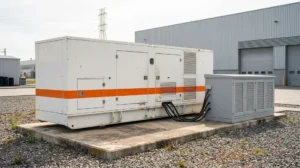
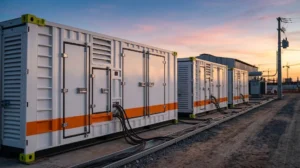
Tecnogera provides its oil sector clients with diesel power generators weighing up to 14 tons, ideal for being moved by platform cranes. Additionally, the company has a dedicated department for the oil and gas sector and specialized labor in the segment.
This has enabled the development of equipment that is entirely different from the rest of the market and compatible with the sector’s needs. The generators supplied by Tecnogera for offshore platforms have a configuration specifically designed for work in these environments. They feature alternators (which offer greater protection to the generator), special paint that eliminates any chance of rust, and a system that detects and combats fires.
As you can see, generators used on oil platforms must not only have maximum efficiency but also various safety factors to prevent any type of accident.
Local content and reliability
Providing temporary power to the oil and gas sector involves more than technical requirements. In addition to needing robust equipment capable of operating under difficult offshore conditions and providing stable power for a wide range of equipment, it’s also important to consider the value of local manufacturers. This is a common practice worldwide, and Brazil is no exception.
Petrobras prefers suppliers with local content in their products, meaning the more “made in Brazil” parts an equipment has, the better. In this regard, Tecnogera also stands out, as its generators contain nearly 90% of parts manufactured in Brazil.
Other factors to consider when choosing generator sets include equipment size, ease of maintenance, reliability, and availability of spare parts. Ideally, generator sets should operate without full maintenance for long periods, so their movement to the mainland occurs as rarely as possible.
Load bank and commissioning
The selection, transportation, and movement of generators are just the initial phases for providing temporary power to oil platforms. When the generator sets are ready to operate, a commissioning test on the system is necessary.
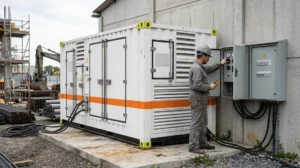
The test involves operating all generator sets at full load, in resistive and reactive load banks. With so many variables to manage, it’s ideal for oil companies to hire companies that offer complete solutions.
Tecnogera provides both generator sets and chillers and load banks, allowing the entire operation to be concentrated in a single team, facilitating work and communication between the client and the supplier.
The commissioning of the platform’s electrical system is essential as it allows potential problems in power generation—especially on platforms that have not yet started operations or are returning to activities after some downtime—to be detected. Without commissioning, the problem could be discovered only when the “industry” is operational, causing financial losses or, in the worst-case scenario, accidents. After the tests, Tecnogera produces reports covering all results.
Preparation for contingencies
With everything ready and the platform operating at full capacity, it’s time to plan for contingencies. With a dedicated area for the oil and gas segment, Tecnogera always has a contingency plan in case the platform needs to increase or decrease its power consumption.
The company also considers the possibility of emergencies such as platform power outages or storm threats, ensuring that its generators will act to prevent production shutdowns.
As you can see, providing temporary power to oil platforms is a highly challenging task. In Brazil, Tecnogera stands out for its high level of specialization. Want to learn more? Contact a specialist.