ONS forecasts improvement in Brazilian reservoirs
In early May 2018, the National System Operator (ONS) announced that water reservoirs are expected to reach the end of the dry period (November) in a more comfortable situation than in previous years. According to the agency, the expectation is that the average reservoir level will be around 30%.
The forecasted percentage is above the 18.7% that the reservoirs marked in the Southeast/Central-West and well above the 5.5% that those in the Northeast region marked on November 30 of last year.
Cantareira System is a concern again
While the reservoir situation in the Northeast appears comfortable, in São Paulo, the water level of the Cantareira System, which supplies 7.4 million people, is a concern again. The level of the main reservoir in the metropolitan region is at 48.1%, not considering the dead volume, the name given to the technical reserve.
This percentage is lower than what was recorded before the start of the water crisis, which hit the city of São Paulo in 2014 and 2015. In 2013, when the first alerts for a possible crisis were given, the Cantareira water volume was at 61.5%.
Use of generators in water crises
Experience in the crisis of 2014-2015
During the water crisis, and to extract water from the dead volume, the São Paulo State Basic Sanitation Company (Sabesp) used energy generators to activate the pumps that extracted water from the deepest areas. Subsequently, these waters were transferred to higher areas already affected by the lack of rain.
Action in the Northeast in 2017
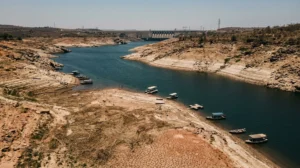
A similar situation occurred in 2017, this time in the Northeast region. During the most critical period of the water crisis that affected the region, energy generators were used in the Sobradinho Reservoir, in Bahia, which reached 5.1% of its total capacity. The generators pumped the waters to higher levels to maintain the supply for companies and the population.
Tecnogera: expertise in sanitation
With the expertise acquired over more than a decade of developing temporary energy solutions, Tecnogera has been acting very effectively in sanitation area demands.
Rio Grande-Alto Tietê Project
In 2017, Tecnogera was again contracted by Sabesp to install a mini power plant at a water pumping station from the Rio Grande System to Alto Tietê. The goal was to increase water security in Greater São Paulo.
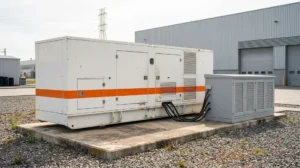
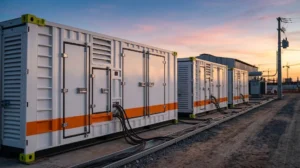
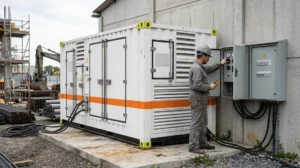
For this project, Tecnogera used gas-powered generators, which have less environmental impact and low noise emissions. The generator groups offer an installed capacity of 14.5 MVA and are in operation at the Rio Grande-Taiaçupeba interconnection, in Ribeirão Pires, a city in Greater São Paulo.
Pumping capacity
The energy provided by Tecnogera’s generators is capable of pumping a volume of 4,000 liters of water per second. In addition to the generator sets, the project involved a complete solution for Sabesp’s needs, including commissioning and preventive maintenance services.