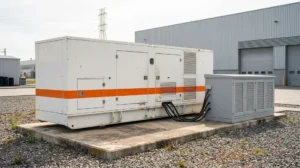
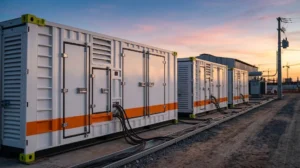
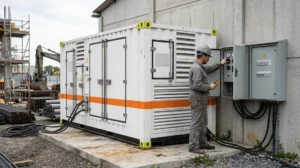
The use of temporary energy through generators is a relatively new process in Brazil. In the 1970s, with large infrastructure investments, generators became allies in enabling the projects that promoted the country’s advancement.
Since then, these devices have been present in various fields of activity. In sectors such as construction, mining, oil & gas, retail, sanitation, telecommunications, industrial, and renewables, complementary energy is largely responsible for ensuring the execution of projects of all sizes.
Growth expectations for 2019
Even though 2018 was marked by economic downturn, the expectation is that large investments, both public and private, will resume starting in 2019, especially in sectors such as transportation, electricity, sanitation, and telecommunications.
According to data from Pezco consultancy, published earlier this year, the investment flow in 2018 is expected to be 1.65% of the Gross Domestic Product (GDP), below the 1.69% mark reached in 2017. For 2019, the expected percentage is 1.85% of GDP. By 2030, investments should reach 2.03%.
BNDES projections
The National Bank for Economic and Social Development (BNDES) recently announced that infrastructure investments are expected to grow by 13% over the next three years, driving its entire supply chain. In this scenario, temporary energy stands out.
Sectors demanding temporary energy
Sectors such as mining and oil & gas, which are not part of the National Interconnected System (SIN), for example, need generators full-time, from the start of the project to full operation. Meanwhile, the wind energy sector requires generators to meet the demands of the construction site and to commission new wind turbines.
Tecnogera’s preparation for growth
With positive forecasts for the resumption of infrastructure investments, companies like Tecnogera are already preparing for a new cycle of expansion.
With 12 years in the market and headquarters in São Paulo, the company has branches in Rio de Janeiro, Minas Gerais, Bahia, and Rio Grande do Norte and boasts the newest and most modern equipment fleet in the country. In total, there are over 800 power generator groups of different capacities and for various applications. Tecnogera also has a highly qualified team, ready to offer customized solutions for all its clients.