Those who raise chickens in western Santa Catarina know that power outages come without warning, at night or in the middle of a storm. Inside the barn, ventilation and heating stop along with the power, and without a generator for the poultry house, the flock is at risk in no time.
To protect the birds, you need to know what shuts down in the barn, which loads the generator must maintain, and what power is suitable for your farm. You also need to choose between owning or renting a generator. It’s worth reading to the end to have these answers before the next storm.
What stops in the poultry house when the power goes out
The climate-controlled poultry house relies on electricity to maintain the environment the flock needs. During a power outage in the poultry house, the following shut down all at once:
- The exhaust fans and ventilators, which renew the air and remove heat from the barn.
- The heating, which maintains the birds’ temperature during the first weeks of the flock.
- The water pumps, which supply the drinkers and misting system.
- The lighting, used in management and the birds’ light program.
- The automatic feeders and environmental control panels.
With the barn closed and these systems stopped, the temperature and air quality change quickly. The time until the power returns determines whether the night ends with a scare or the loss of the flock.
Which loads the generator needs to keep running
The ventilation and heating of the poultry house come first on the list because they keep the flock alive during the outage, and the water pumps join them. Next are the loads that keep the farm’s routine running while the utility company restores power.
| Load | Function in the poultry house | Priority |
|---|---|---|
| Ventilation and exhaust | Renew the air and remove heat | High |
| Heating | Maintain the temperature of the young batch | High |
| Water pumps | Supply drinkers and misting | High |
| Lighting | Management and light program | Medium |
| Feeders and panels | Feeding and environmental control | Medium |
As the number of sheds, type of heating, and batch phase change this list from one farm to another, assessing your farm’s loads comes before choosing the equipment.
How to calculate the generator power for the poultry house
The calculation of generator power starts with the sum of the loads you want to keep running. However, exhaust fans and pumps have electric motors. At startup, this motor draws a much higher current than during operation, and the generator needs to handle the peak without letting the voltage drop.
When several exhaust fans start at the same time, the peaks add up and may require more power than the farm uses with the motors already running. If the exhaust fans start in groups, one after the other, the peak decreases and the generator can be smaller for the same farm.
Our engineering performs this calculation at no cost to you, based on the actual loads of the shed, the type of motor startup, and the number of sheds the generator will serve.
Why the automatic transfer switch shortens the power outage time
During a nighttime outage, without automation, someone needs to notice the power failure, go to the generator, start it, and manually switch the connection from the grid to the generator set. This sequence can take time that the batch doesn’t have.
The automatic transfer switch, suitable for aviaries, milking systems, and negative pressure systems, does this job on its own: it detects power outages, starts the generator, and transfers the loads to it without relying on anyone at the farm. In our article about the function of an automatic transfer switch, you can see in detail the role of this equipment.
Own generator or rented generator for the farm
Buying a generator for the farm means paying for the equipment and also taking care of maintenance, periodic tests, and fuel throughout the year. This cost is included in the cost of each batch.
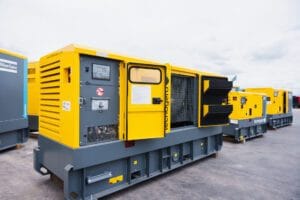
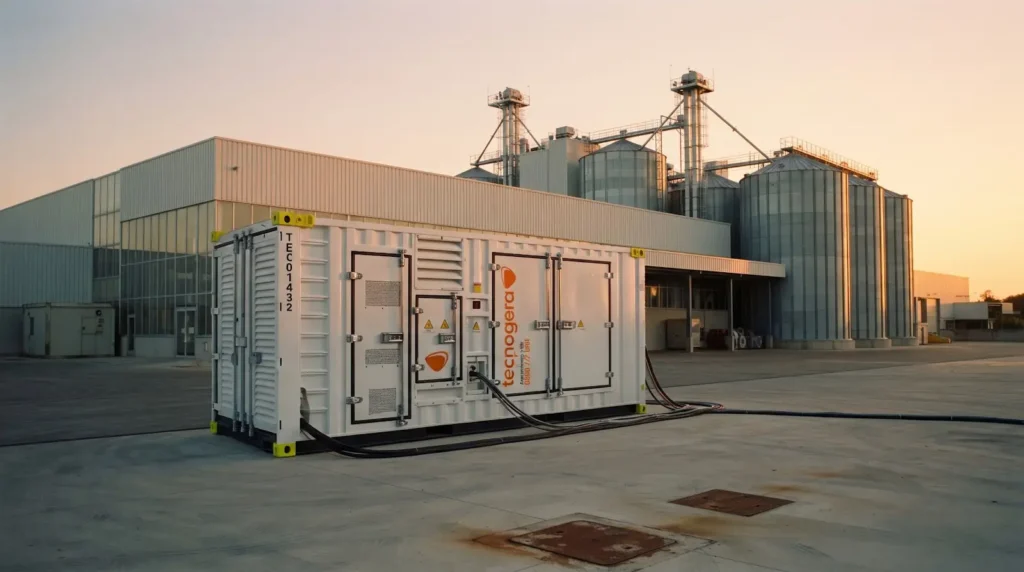
The rented generator arrives sized by our engineering team and can cover the period of greatest risk, such as the bird heating phase or storm season. It also serves as a backup for farms that already have their own generator and need to take it out for maintenance.
If you want to understand why energy needs to be part of the rural producer’s planning, also read our content for the agribusiness entrepreneur about the power generator.
How our Chapecó unit serves farms and aviaries in Western Santa Catarina
If your farm is in Xanxerê, Xaxim, Seara, Quilombo, or Coronel Freitas, within a 40 km radius of our unit, the generator will be operational within 24 hours. In this region, our generator sets also serve slaughterhouses, cooperatives, and hospitals.
The farms and aviaries in Concórdia, Pinhalzinho, Maravilha, Itapiranga, and Alto Uruguai are between 40 and 110 km away and receive our generator. If the farm is further from the unit, the proposal already includes the delivery day.
Our unit is located at Avenida Leopoldo Sander, 1,111, Room 01, in Cristo Rei, Chapecó. For those raising chickens, we offer:
- Power calculation at no cost by our engineering team.
- Equipment operational within 24 hours.
- 24-hour on-call service to assist the farm when the grid goes down.
To bring the generator to your farm, visit our Chapecó unit generator rental page and talk to our team. You can also see other power generation solutions from Tecnogera.
Frequently asked questions
What generator do I need for a poultry house?
It depends on the loads you want to maintain, the number of exhaust fans, and the type of motor start. Our engineering team performs this calculation at no cost, based on the actual loads of the barn.
Does the generator start automatically when the power goes out in the poultry house?
It starts when the farm has an automatic transfer switch installed. The switch detects the outage, starts the generator, and transfers the loads to it without needing someone at the farm.
Can one generator serve more than one barn on the same farm?
Yes, as long as the power considers the loads and motor start of all barns. The project also defines the cables for each barn.
Can I rent a generator to serve as a backup for the farm’s own generator?
Yes, and the rented generator maintains the ventilation and heating of the batch while your own equipment undergoes maintenance or testing.