A substation is an electrical installation composed of a set of equipment responsible for the transmission and distribution of electrical energy, along with protection and control equipment.
The Role of Transformers in the System
Energy substations are responsible for distributing electrical energy. Before reaching homes, electricity travels through a transmission system that starts at power plants and passes through these stations, where equipment called transformers increase or decrease the voltage.
- Voltage Increase: Prevents excessive energy loss along the transmission path.
- Voltage Decrease: Performed in urban centers, allowing safe distribution throughout the city.
The Final Stage of Distribution
Although lower, the voltage used in distribution networks is still not suitable for immediate residential consumption. Therefore, smaller transformers are installed on street poles to further reduce the voltage going to homes and commercial establishments.
This entire flow constitutes the National Interconnected System (SIN). Substations can be classified by their function, voltage level, installation, or operation. Power generators play a crucial role in supporting these activities.
The 4 Stages of the Electrical System
To understand the importance of this structure, visualize the path of electricity:
- Generation: Production at power plants (Hydroelectric, Solar, Thermal).
- Transmission: Energy passes through a step-up substation to travel long distances.
- Distribution: Step-down substations reduce the voltage for the urban network.
- Consumption: Energy reaches pole transformers and, finally, the end consumer.
Classification by Function in the Electrical System
The function of the substation defines its strategic role in the network:
1. Transformer Substations
These use transformers to convert supply voltage to a different level (higher or lower). They are subdivided into:
- Step-Up Substations: Located at the output of generating plants, they raise the voltage to transmission and sub-transmission levels (economic energy transport).
- Step-Down Substations: Located on the outskirts of cities, they lower voltage levels to avoid inconveniences for the population.
- Distribution Substation: Reduces voltage to the primary distribution level and may belong to the utility or large consumers.
2. Switching Substations
The Switching Substation is responsible for interconnecting supply circuits at the same voltage level, enabling their multiplication and circuit sectioning, allowing the energization of shorter sections.
Unlike transformer substations, these do not alter the voltage. Their function is to interconnect circuits at the same voltage level, allowing:
- Circuit multiplication;
- Line sectioning for maintenance;
- Strategic switching of electrical flow without shutting down the entire system.
Classification by Voltage Level and Operation
Electrical substations can also be classified by voltage level: low, medium, high, and extra-high voltage:
- Low Voltage: Substations with voltage levels up to 1 kV.
- Medium Voltage: Substations with voltage levels between 1 kV and 34.5 kV, such as 6.6 kV, 13.8 kV, 23 kV, and 34.5 kV.
- High Voltage: Substations with voltage levels between 34.5 kV and 230 kV, such as 69 kV, 138 kV, and 230 kV.
- Extra-High Voltage: Substations with voltage levels greater than 230 kV, such as 345 kV, 440 kV, 500 kV, and 750 kV.
Classification by Installation Type
The environment where the substation is set up directly impacts its maintenance:
Open-Air Substations
Built in large outdoor areas. They require machines resistant to adverse weather conditions (rain, wind, and pollution). Natural wear is greater, requiring more rigorous maintenance schedules.
Indoor Substations
Equipment installed in buildings, underground chambers, or metal cubicles. They are protected from the elements, which increases the lifespan of sensitive components.
Classification by Operation Mode
- Substations with Operator: Rely on local professionals for decision-making and manual control.
- Semi-Automatic Substations: Use computers and safety systems to prevent incorrect maneuvers by the operator.
- Automated Substations: Control is done remotely via SCADA (Supervisory Control and Data Acquisition) supervision software.
Mobile vs. Fixed Substations
While fixed substations are permanent structures made of masonry and steel designed for decades of continuous operation, mobile substations offer the agility needed for the dynamic nature of the electrical sector.
The Advantage of Mobility and Flexibility
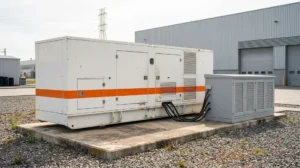
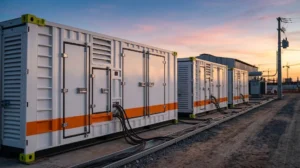
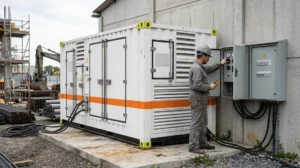
Mobile substations are high-performance temporary solutions, designed for situations requiring speed and versatility. They have all the equipment and devices of more complex systems (from transformers to protection and control systems), operating at various voltages with the exclusive advantage of portability.
Main Use Cases for Mobile Substations:
- Scheduled Maintenance: Support for power transformers without interrupting the energy flow.
- Emergency Actions: Immediate restoration in case of critical failures in the fixed system.
- Seasonal Projects: Handling extra loads at events or priority works that do not yet have a permanent network.
Tecnogera Technology in Mobile Substations
Tecnogera’s Mobile Energy Substations are designed to bring mobility and operational dynamism wherever energy is needed. Our solutions offer:
- Dynamism and Performance: Developed with high-tech components ensuring service continuity, avoiding losses and disruptions due to power outages.
- Reliability and Safety: Modern designs that meet the main technical requirements and safety standards of the sector.
- Voltage Versatility: Catering to various voltage configurations, making it an extremely flexible solution for industrial and commercial applications.
Applications by Segment
- Mining and Industry: Power in remote locations or temporary work fronts.
- Construction: Powering construction sites before the installation of a permanent network.
- Events and Data Centers: Ensuring stable power and redundancy to prevent critical outages.