The years 2017 and 2018 were quite challenging for the construction sector. During this period, the stagnation of the segment intensified, many projects were halted, and recovery expectations were aligned with the economic rebound, which began to show signs in the second half of last year.
Positive Indicators for the Sector
A study conducted by Fundação Getúlio Vargas (FGV) for the Brazilian Association of Construction Materials Industry (ABRAMAT) indicated that 73% of materials industries plan to invest in the next 12 months. Among the planned investments, priorities include equipment modernization and increasing production capacity.
Another study, this time the Construction Industry Survey released by the National Confederation of Industry (CNI), shows that all construction confidence indicators pointed to improved prospects in January 2019.
Confidence Indices on the Rise
And the good news doesn’t stop there. Last January, the investment intention index rose to 38 points, the highest in the last five years, and the Construction Business Confidence Index (Icei-Construção) reached 63.7 points, a figure above the historical average of 53.1 points. According to Icei-Construção, for the first time since 2014, industry entrepreneurs are confident about the current business environment.
Impact on the Temporary Energy Sector
The recovery and optimism movement in the construction sector, one of the most important in the country due to the investments received and jobs generated, positively impacts segments like temporary energy solutions.
For Tecnogera, the effects of this favorable scenario have already begun to be felt with increased demand for the company’s solutions in the last months of 2018, especially from October onwards.
Essential Energy from the Start of Construction
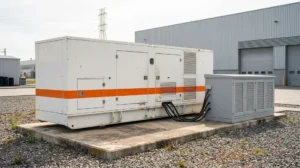
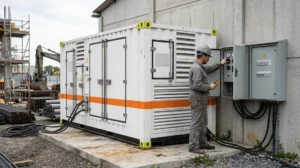
Temporary energy is essential right from the construction sites. Even before construction begins, generators are installed to enable employee accommodations, cafeterias, and the commissioning of equipment to be used.
Since a construction project does not receive energy supply from traditional utilities, the use of generators ensures that all installations will function throughout the construction period. Depending on the project profile, this process can take from two to five years.
Diversity of Projects and Solutions
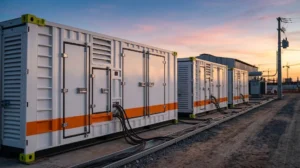
When discussing construction, it’s important to consider the various formats and needs. While a residential building can be powered by a single generator, the construction of a factory or a wind farm will require a mini power plant, which includes several pieces of equipment, transfer panels, and kilometers of cables, not to mention fuel tanks.
Expertise in Customized Solutions
At this point, the expertise of companies like Tecnogera in developing comprehensive temporary energy solutions can make all the difference. With 12 years in the market and a highly qualified team, Tecnogera offers tailor-made solutions to meet the diverse demands of its clients.