Electricity is indispensable for society, but do you know how it reaches your home?
Many inventions have revolutionized the world, brought to reality through the studies and creativity of people who made history, and electricity is among the greatest. But do you know how power generation occurs in Brazil?
Even though it’s so intensely present in our daily lives that it’s hard to imagine modern life without it, we don’t always know exactly how this market works and what’s behind every energized outlet.
Let’s understand what’s involved and discover the essential points that make it possible to connect any electrical, electronic, or household appliance in homes, businesses, and other environments.
How Does Power Generation Occur in Brazil?
Primarily from hydroelectric plants, which is almost implied, especially when analyzing the privileged river basin the country has, but the process doesn’t end there—it actually begins. It can be described as follows:
Generation
According to the National Electric Energy Agency (ANEEL), 62% of the installed capacity in operation in the country comes from hydroelectric plants, 28% from thermoelectric plants (fossil fuels, mineral coal, natural gas, nuclear, and biomass), and the remaining 10% comes from wind farms and imports from other countries.
The largest power-generating plants in Brazil are Itaipu (PR), Belo Monte (PA), São Luiz do Tapajós (PA), Tucuruí (TO), and Santo Antônio (RO), which together exceed 45,000 megawatts.
Transmission
After power generation in Brazil, the next step is to transmit this energy from the generation point to the consumer centers.
Distribution
In consumer centers, distributors become responsible for supplying electricity to Brazilian homes, industries, and businesses. There are also traders, companies authorized to buy and sell energy, usually for higher-demand customers.
How is Energy Transmitted Across Brazil?
Even if the process is clear, it might seem puzzling to explain how transmission occurs in a country with over 8.5 million km².
This doubt may intensify when realizing that among the 10 largest power-generating plants in Brazil, 8 are in the North and Northeast regions and only 2 in the Southeast.
The answer is the National Interconnected System (SIN), a transmission network with more than 100,000 km of extension, enough to make almost 12 round trips, in a straight line, from Oiapoque to Chuí, the two extremes of Brazil.
There are some points in the Brazilian electrical system that are not connected to the SIN, which are the isolated systems, mainly present in the Northern region of the country.
This isolation, however, is gradually decreasing. Also according to ANEEL, only 2% of the electricity market across Brazil remains isolated, thanks to new interconnections between them and the SIN.
How Much Does Electricity Cost in Brazil?
Expensive, unfortunately. Even though it’s essential for families, businesses, industries, and society as a whole, the prices are quite high.
According to a ranking by the Federation of Industries of Rio de Janeiro (Firjan), in January 2017, the highest electricity prices worldwide are as follows, in reais (according to international currency exchange rates at the time) per MW/h (megawatt/hour):
- 1st – India: R$ 597
- 2nd – Italy: R$ 536.1
- 3rd – Singapore: R$ 459.4
- 4th – Colombia: R$ 414.1
- 5th – Czech Republic: R$ 408.9
- 6th – Brazil: R$ 402.3
- 7th – Turkey: R$ 395.2
- 8th – El Salvador: R$ 391.7
- 9th – Portugal: R$ 323.6
- 10th – Mexico: R$ 323.2
Besides the undesirable 6th position, the value is 46% above the international average, which is R$ 275.74 per MW/h.
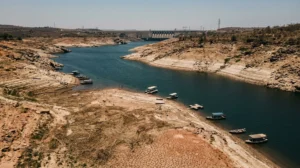
There are several reasons that help explain this result, such as energy policies that need adjustments, high tax burdens, and droughts, which weigh on the pocket when it’s time to pay the electricity bill.
Are There Other Alternatives for Power Generation?
Yes. Even with the extensive National Interconnected System, it may be necessary to resort to other possibilities, even in cities and regions where electricity is distributed.
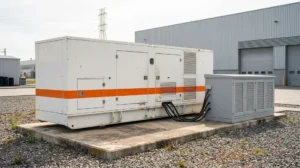
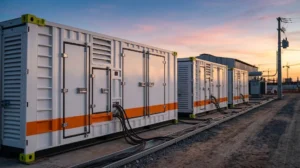
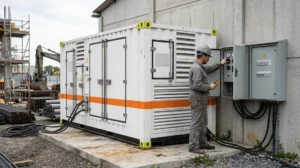
In these cases, the main recommendation is to opt for a power generator, equipment whose utility is even greater than you might imagine.
Distribution problems, high tariffs charged during peak hours, and the need for power generation in hard-to-reach locations are just some of the situations where generators can be used.
Such equipment allows power generation through the use of fuel, usually diesel for larger needs and gasoline for domestic and smaller applications.
The use of a power generator can result in the following benefits:
- Availability of electricity in mines, rural areas, and other hard-to-reach locations;
- Alternative source for use during peak hours, when usage is more intense and, consequently, the tariffs charged by electricity distributors may increase;
- Uninterrupted power supply even in cases of failures and problems in the traditional distribution network;
- Projects developed specifically according to the needs of each company.
Power generation in Brazil covers the vast majority of the country, but generators can help prevent distribution problems, as well as bring good savings during peak hours.
Instead of having to purchase a generator, which has a very high cost, rental proves to be the best solution in the short, medium, and long term, both for savings and for the assurance of high-quality equipment and the support provided.
Now that you know how power generation occurs in Brazil and understand that distribution can be faulty or very expensive at times, when needed, rely on generator rental and make the most of the benefits electricity has to offer!