The lack of rain and the low water storage levels in reservoirs, especially in the Northeast region, continue to concern the productive sector and government agencies.
Even with energy rationing still being ruled out, some measures, such as the adoption of level 2 red flag tariff, charged on the electricity bill, are already being taken.
Another action considered by the government is the activation of thermal power plants.
The initiative, which had already been announced by the government, was temporarily ruled out.
The possible activation of thermal power plants, which are more expensive to produce energy, aims to complement the deficient energy matrix of hydroelectric plants, which, with the water crisis, have their water reservoirs at increasingly lower levels.
Just to give you an idea, in the first week of November 2017, the Electric Sector Monitoring Committee (CMSE), linked to the Ministry of Mines and Energy, decided to hold weekly meetings to monitor the level of reservoirs that reached levels lower than those observed before the 2001 rationing.
In the Northeast region, the reservoir level is at 5.78%, a volume below the 8% of the same period in 2001.
But why might the activation of thermal plants require greater use of power generators?
First, it’s worth understanding what thermal power plants are.
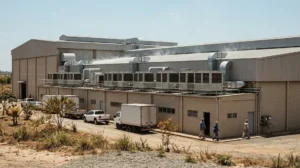
These plants are units of electricity generation that use fossil fuels, such as natural gas, coal, and diesel oil, to operate.
In Brazil, according to data from the National Electric Energy Agency (Aneel), there are 2,941 thermal power plants in operation, which together total a capacity of 42,782,492 kW.
Even with this capacity, a good part of the thermal plants remains inoperative for long periods of the year, being activated in times of energy risk, especially when there is a scenario of water crisis, as the country is currently experiencing.
And, it is at this moment when they are activated by the government, that we observe that many thermal plants are not ready to go into operation and deliver the expected volume of energy to the system.
On many occasions, these thermal plants have their equipment under maintenance and cannot operate immediately at their maximum capacity.
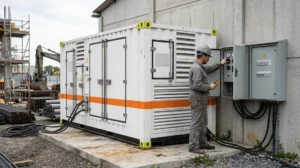
To deliver the required volume of electricity, the thermal plant contracts temporary energy supplied by generators to complement what it can produce.
Example: a thermal plant has the capacity to produce 20MVA of energy, but at the moment it is activated, it can only provide half of that volume.
To make up for this difference, the plant hires power generators, which are installed on its site and produce the missing amount of energy for the necessary period.
Meeting this emergency and specific demand is one of Tecnogera’s specialties.
From the moment the thermal plant makes its demand, Tecnogera enables the project of a mini generating plant, which is quickly installed and immediately starts producing the complementary energy.
When the thermal plant is able to produce the total capacity demanded by the system again, the temporary generation structure is demobilized.
For thermal plants, the use of temporary energy via generators is a viable solution that adds value to the delivered service.