Since 2015, Brazilian electric bills have featured three colors, and even years after the adoption of tariff flags, they still cause some confusion, especially when understanding the real value of consumption.
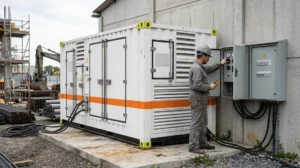
Power generators become excellent allies in planning and efficiently managing consumption costs and the actual amount paid on the bill.
Want to learn more about how tariff flags work and how to better plan your electric energy consumption? Keep following our publication!
How did tariff flags come about and what are they?
Since the National Electric Energy Agency (ANEEL) created the tariff flag system, many Brazilians have become accustomed to a three-color system present on their bills.
This system was developed to inform and signal to consumers the state of power generation in the country and the region where they live.
Cost transparency was one of the reasons ANEEL used to implement this type of system, showing customers more quickly the current state.
The tariff flag system consists of three different impacts on the electricity bill:
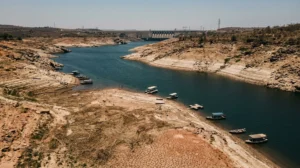
- The green flag indicates that the Brazilian hydroelectric system is in good working order, with water reservoirs in good condition and supply meeting demand healthily. Under this flag, there is no additional charge on electric energy consumption bills;
- The yellow flag indicates that conditions are slightly less favorable for Brazilian hydroelectric plants, with some deficit or inability to meet energy demand. As a solution, some thermoelectric plants are needed to meet this increased demand, which raises the overall supply cost. An additional charge is levied at R$1.50 for every 100 kWh or its consumed fraction;
- If the scenario becomes even less favorable, the red flag comes into play. It is triggered when power generation costs are high due to increased use of thermoelectric plants. It is divided into two tiers, which are:
- Tier 1 of the red flag is also known as the pink flag and results in an additional charge of R$ 4 for every 100 kWh or its consumed fraction;
- Tier 2 of the red flag results in an additional charge of R$ 6 for every 100 kWh or its consumed fraction.
With the application of tariff flags, part of the annual adjustment charged on the electricity bill is spread out with the application of different flags.
An important piece of information is that this additional cost charged according to the tariff flag is already included in the electric energy bill. It can be understood as an almost real-time adjustment by ANEEL for power generation.
This highlights the more participatory role of consumers in the variation of the amount paid. Another point to be clear is that if there is any reduction in a company’s or business’s consumption on its own, it does not directly impact the reduction of the tariff flag charged.
The color is defined for all consumers of the so-called National Interconnected System (SIN), which is divided by regions of Brazil. The state of Roraima is the only one not in the SIN, so its consumers do not have tariff flags.
Generators can assist companies
Understanding how consumption is actually occurring in the company involves identifying the best time and the best time of day to consume. From there, define when to use other power generation options.
Peak hours for electric energy consumption may be ideal for generator use, helping reduce these costs. The client can choose to purchase or rent the power generator.
And a point in favor of this type of application is the monthly format of flag changes by ANEEL. This allows the company to properly plan its consumption.