According to data released by the Brazilian Photovoltaic Solar Energy Association (Absolar), estimates for this year are that the installed capacity of solar energy in the country will increase by 44%, reaching 3.3 gigawatts produced. Also according to Absolar, the expectation is that the source will generate total investments of R$ 5.5 billion.
Growth of distributed generation
One of the reasons that should stimulate this market is the increase in so-called distributed generation, in which solar energy is directly connected to a distribution network, facilitating supply to homes and commercial establishments.
Expanding wind energy
Another source that is growing more and more is wind energy. According to information provided by the Brazilian Wind Energy Association (Abeeólica), around 15,000 megawatts of wind energy are expected to be produced in the first quarter of 2019. The expectation is that the volume generated by the winds will become the second largest energy source in the country this year, representing around 10% of the entire Brazilian electricity matrix.
There are already more than 500 wind farms spread across Brazil, and one of the main reasons for the strong investment and greater appreciation of this sector is the fact that it is a renewable source and its “manufacturing” has less impact on the environment.
The essential role of temporary energy
But there is one sector, in particular, that plays an essential role in ensuring that the good prospects for wind and solar sources in 2019 are actually achieved: temporary energy.
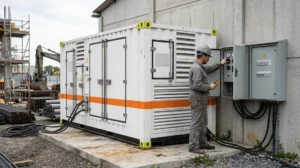
For wind and solar plants to function properly and continue their production process, they also need energy. In the case of wind farms, the use of generators and load banks is essential.
Implementation and commissioning phases
While generators are used during the construction phase, load banks gain prominence during the commissioning period, a phase where the production process is effectively tested. With the use of load banks, it is possible to simulate and recreate the load in a condition very similar to the energy system where the plants will be integrated.
Load banks enable the commissioning of wind turbines at any stage of implementation, involving everything from assessing generation quality to energization. By testing the production process, it is possible to identify and correct failures, as well as check the wind turbine’s power generation capacity.
Importance of high performance
Given the high demand and good expectations of this market, it is essential that the load banks chosen for commissioning are high-performance and offer maximum safety.
Tecnogera’s expertise in the renewable sector
With over ten years of experience in the market, Tecnogera is an expert in providing customized temporary energy solutions for all customer profiles. In the renewable area alone, the company has been responsible for commissioning over 2,500 wind turbines.
Tecnogera has more than 800 generator sets, capable of meeting large demands. Highly qualified teams are available 24 hours a day, 7 days a week to handle all types of adversity.