New platforms in the pre-salt
The year started with good news for the oil & gas sector. On January 2nd, Petrobras announced that this year it will put into operation eight new platforms destined for the pre-salt. The main objective of the initiative is to increase oil extraction from 2.6 million barrels per day to 3.6 million in the next two years.
Petrobras expects to increase its oil production in Brazil by 38% between 2018 and 2022 with the installation of a total of 19 new platforms by 2022. In addition to the eight planned for this year, there will be: two in 2019, six in 2021, and three in 2022.
This is the largest volume of platforms installed in a single year. The previous milestone was in 2014, when four vessels were put into operation. Each platform has the capacity to produce 150,000 barrels of oil and 6 million cubic meters of natural gas per day.
Opportunities for the energy sector
Currently, more than 100 oil platforms are in operation off the Brazilian coast, and the expected resumption of sector growth in 2018 should boost a network of suppliers linked to the oil & gas areas, including temporary energy providers like Tecnogera.
Oil platforms draw attention for offering a complex and complete structure for a team of professionals, who spend weeks on board, work in shifts, sleep, eat, and rest at sea, many kilometers from the Brazilian coast.
As they are far from the mainland, the platforms are not connected to the National Interconnected System – SIN and need alternative energy sources to ensure the operation of all the machinery involved in this modality. The use of power generators is one of the sources that best fit this operation model.
Innovation in generators for platforms
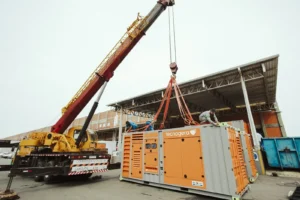
But it’s not enough for the generator to start operating and generate energy. In addition to being able to face a tough and costly logistical process, which involves transport by boat and hoisting to the platform, the generators need to stand out for their efficiency and high performance.
To meet the demands of this market, Tecnogera’s R&D team has increasingly invested in research for the development of generators with higher power density, efficient engines, and that provide the same energy while consuming less fuel.
Another characteristic of this new family of generators is size and weight. As space is optimized on oil platforms, the smaller the equipment, the better for the operation. The reduced weight directly impacts the logistical costs involved in transporting the generator from the mainland to the platform.
In this scenario, Tecnogera’s forecast is to increase its participation in the oil & gas market, consolidating itself as a supplier of tailor-made and customized solutions to meet the most diverse demands of each client with the use of engineering integrated into the project, whether low or high voltage.