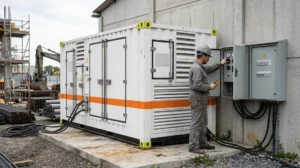
Ensuring uninterrupted power for critical operations goes beyond just selecting a good generator. The cabling is the link that connects power to your needs, and without certification, the entire operation faces hidden risks.
But how does certification impact your project? When we consider the risks of inadequate cables, the need for Tecnogera’s standard to protect your assets becomes clear.
Why does certification go beyond just copper wire?
Often seen as just an accessory, cabling is actually a critical component of the electrical infrastructure.
Certification ensures that the cable has been tested under extreme conditions and meets strict technical standards for manufacturing and performance.
A certified cable features metal alloys with controlled purity and thermal insulation designed to handle high loads without degrading. Without this, energy transmission efficiency is compromised from the very first minute of use.
What are the risks of using undersized or uncertified cables in high-power applications?
Using cables that do not meet technical criteria for high power is a cost-saving measure that can be expensive. Hidden risks include:
- Overheating: cables lacking proper thermal resistance can melt the insulation, exposing live conductors.
- Voltage drop: low-quality material increases electrical resistance, resulting in energy waste.
- Equipment damage: fluctuations caused by poor cabling can burn out sensitive components of machines connected to the generator.
What are the main technical certification criteria?
The certification of a power cable is based on three fundamental pillars:
- Conductivity: ensures that the metal (usually high-purity copper or aluminum) transmits current with minimal loss.
- Insulation: use of materials like XLPE or EPR that withstand continuous operating temperatures of up to 90°C and much higher short-circuit peaks.
- Thermal resistance: the ability of the casing to not propagate flames and maintain physical integrity even under prolonged thermal stress.
What is the financial impact of poor cabling?
A system with inadequate cabling generates what we call excessive voltage drop, causing the generator to work harder to deliver the same energy at the endpoint, consuming more fuel.
In the long run, this inefficiency silently increases operational costs (OPEX).
It makes no sense to invest in distributed generation or modern real-time monitoring systems if energy is lost along the way due to poor-quality cables.
How to ensure operational safety by preventing short circuits and fires?
In temporary installations, such as construction sites or events, cables are exposed to weather, machinery traffic, and moisture.
Certified cables have superior mechanical protection that prevents insulation breakage.
Preventing short circuits starts with choosing approved accessories. Avoiding makeshift connections is crucial to eliminating hot spots, which are the main fire hazards in power electrical systems.
What are the advantages of certified cabling in the speed of assembly and disassembly?
For operations that require speed, certified and standardized cabling facilitates the work of engineering teams.
- Flexibility: quality cables are easier to handle and run through cable trays or trenches.
- Connectivity: using quick connectors and compatible accessories drastically reduces machine setup time.
- Reliability: less time spent on continuity tests and last-minute repairs.
If you work with complex projects, understanding common lighting errors in construction and events helps you better plan the load and cabling needed.
How does Tecnogera ensure system integrity through approved accessories?
At Tecnogera, quality standards are non-negotiable. We don’t just provide the generator but a complete solution that includes certified cabling and rigorously tested accessories.
Components within NBR 5410 standards: the safety your project demands. Ensure standardization for your team and full compliance for your company.
FAQ – Cabling Questions
- What defines a cable as “certified”?
It is a cable that has undergone laboratory testing following national (ABNT) and international (IEC) standards.
- Can cable undersizing burn out my generator?
Directly, it’s unlikely, but excessive effort and heat generated at the terminals can damage the busbars and the generator set’s control system.
- What is the difference between cables for fixed and temporary installations?
Cables for temporary installations need greater flexibility and extra mechanical/chemical resistance, as they are frequently moved and exposed.