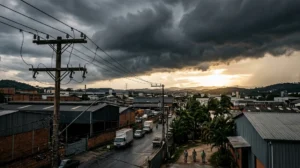
To avoid the losses associated with power outages, the best strategy is not to rely solely on the public grid. Recent blackouts in major urban centers have reinforced that energy autonomy is no longer a differential but has become part of the continuity planning for any critical operation.
What to do when the power goes out?
When you notice a power interruption, some measures can help preserve the safety of people and equipment.
Unplug devices
Disconnect electronic devices and appliances reduces the risk of damage caused by voltage fluctuations when power is restored. More sensitive equipment, such as computers, televisions, and electronic systems, deserve special attention.
Check if the problem is only in your installation
Before contacting the utility company, check if the power outage occurs only in the property or also affects neighboring properties.
If the interruption is only in the residence or business, check the distribution panel to identify if any circuit breaker has tripped.
If it trips again shortly after being reset, do not force the equipment and seek a qualified electrician to assess the installation.
Contact the utility company
If the interruption affects the entire region, report the occurrence to the utility company responsible for the power supply. In addition to reporting the problem, they may provide an estimate for service restoration.
What to do when the power returns?
After the power supply returns, check if all equipment is functioning normally before resuming your activities.
If any device has been damaged due to interruption or fluctuations in the power grid, it is possible to request reimbursement from the utility company, according to the rules established by the National Electric Energy Agency (ANEEL).
To do this, it is important to report the incident, keep the service protocol number, and follow the procedure indicated by the distributor within the time frame provided by the regulations.
What can cause a power outage?
Various factors can cause interruptions in the electricity supply. The main ones include:
- Heavy rains and strong winds;
- Lightning strikes;
- Falling trees or branches on the power grid;
- Accidents involving power poles and cables;
- Overloads on the power grid;
- Scheduled maintenance carried out by the utility company;
- Failures in distribution system equipment.
Depending on the cause, power restoration can take from a few minutes to several hours.
How to avoid the impacts of a power outage?
In many operations, waiting for the power grid to be restored is not an option. Hospitals, industries, logistics centers, supermarkets, data centers, events, and commercial establishments rely on continuous power supply to maintain their activities.
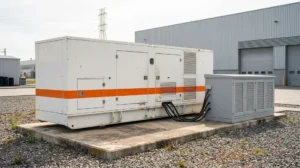
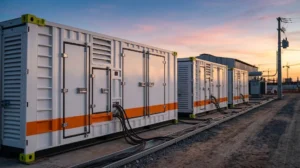
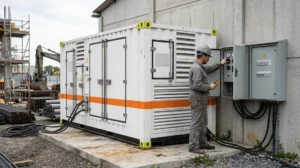
In these cases, the use of a power generator allows critical equipment to remain operational during utility interruptions, reducing operational risks, financial losses, and unscheduled downtime.
Depending on the application, the system can automatically start operating after detecting a power outage, ensuring greater security and continuity for the operation.
How to create an energy contingency plan?
- Mapping of critical loads: identify which equipment and processes cannot stop under any circumstances.
- Standby Generator with automatic start: ensures that the operation continues running seconds after a power outage, without manual intervention.
- Temporary energy contract for seasonal emergencies: useful in regions with a history of network instability.
- Preventive maintenance plan for electrical installation: reduces the risk of internal failures combined with external power outages.
Critical operations, such as hospitals, data centers, and industries with continuous processes, cannot rely solely on reacting to the problem: they need a tested contingency plan ready to be activated at any moment.
When is it worth using a power generator?
Renting a generator is recommended whenever the unavailability of power could cause losses or compromise the safety of the operation. The main applications include:
- Industries and production lines;
- Hospitals and clinics;
- Residential and commercial condominiums;
- Supermarkets and distribution centers;
- Data centers;
- Temporary events;
- Construction sites and works.
With proper sizing, the generator ensures energy autonomy during power grid outages and helps increase operational reliability.
How to ensure power even during an outage?
If continuity of power supply is essential for your home, condominium, business, or operation, having a power generator is the most effective way to avoid interruptions.
In addition to keeping critical equipment running, the solution reduces losses caused by unexpected shutdowns and increases safety during power grid failures.
Tecnogera offers power generator rental solutions, with customized sizing for each application.
Our technical team assesses the installation demand and recommends the most suitable equipment to ensure reliable supply whenever there are utility interruptions. Talk to our specialists!