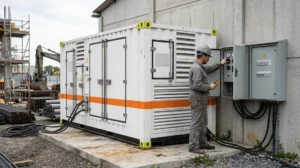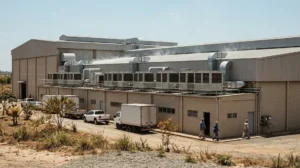
Power generators are efficient solutions for unexpected outages, scheduled downtimes, or supplementary power needs.
With so many options on the market, choosing the right type of generator can be challenging.
Here are the main criteria to consider when selecting a power generator.
Diesel Generator
We’ll start the comparison by sharing data on diesel-powered generators.
In terms of efficiency, diesel generators have an efficiency of 36% to 41%, with a fuel calorific value of 10.50Kcal/kg.
Advantages
The main advantages of using diesel-powered generators are:
- Ease of use in large-scale operations
- Provision of high-power generators
- Greater fuel availability
- Recommended for uninterrupted power supply
While diesel generators have many advantages, they are typically recommended for industries, shopping malls, supermarkets, and other large-scale activities.
Despite numerous benefits, there are considerations when using diesel generators.
As a fuel-powered generator, it requires frequent refueling or excess fuel storage for replenishment.
Additionally, diesel is a highly polluting fuel with high noise emission levels.
Diesel generators also require periodic filtration to operate at full capacity.
Gas Generator
For gas-powered generators, efficiency ranges from 34% to 38% with a fuel calorific value of 10.50 kcal/kg.
Advantages
The main advantages of gas-powered generators are:
- No need for fuel storage
- Lower pollutant levels
- Reduced environmental impact
- Can be reused in cogeneration systems
Gas-powered generators are not recommended for critical environments like hospitals and large construction sites due to potential operational disruptions and interruptions.
Another consideration for natural gas generators is the need for an installed natural gas distribution network on-site.
While gas generators eliminate fuel storage concerns, they introduce other risks.
Gas is highly flammable, and any leak could result in a major accident.
Dual-Fuel Generator
Another market option is dual-fuel generators, which combine the power and low cost of diesel engines with the long lifespan of natural gas engines.
Although more expensive than traditional models, they maintain the low operating cost of a compression ignition engine.
Conclusion
As you can see, the choice of generator depends on your objectives and available working conditions.
Diesel generators are more suitable for construction and civil works due to constant use and higher power, while gas generators are recommended for residential complexes.
No matter your company’s needs, our technicians can recommend the best solutions.
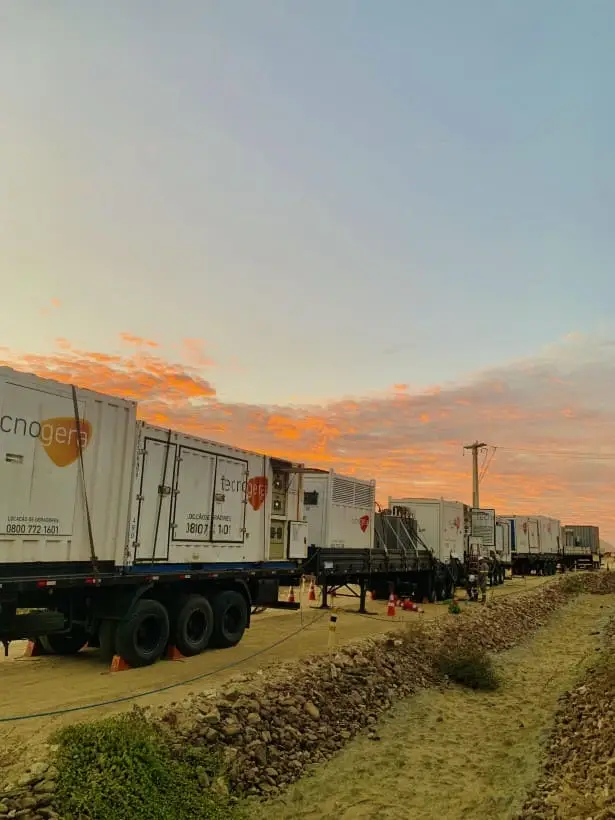
We have one of the largest and newest fleets of enclosed and silenced generator sets in Brazil for rental, offering comprehensive, high-tech options for various segments and specific needs, such as parallel operation, synchronization, and ramping.
Contact our specialists now.