

How much fuel does a diesel generator consume?

Diesel generators are widely used in industries, businesses, hospitals, and schools. Consumption varies with power: GMG 25 kVA consumes 4 liters/hour, GMG 100 kVA consumes 15 liters/hour, GMG 180 kVA consumes 27 liters/hour, and GMG 1500 kVA consumes 223 liters/hour. Operation converts diesel combustion into mechanical movement, which is then transformed into electrical energy. Proper maintenance and fuel quality directly impact efficiency and consumption.
Generator 450 – discover where it can be used
The 450 KVA power generator is a large model recommended for the industrial sector, especially the food and beverage industry. It is also used in large events and shows that require equipment like high-definition screens, powerful sound systems, and climate control. It offers immediate response and total security, keeping the location always illuminated regardless of fluctuations in the power grid.
What is a magnetic generator motor?
Magnetic energy results from the proximity of two similar poles creating a repelling force. It is used in the industry to transport heavy metal parts and in the transportation sector for high-speed trains. Contrary to internet myth, it does not generate energy infinitely as it follows the Law of Conservation of Energy, which states that energy cannot be created or destroyed, only transformed into different forms.
How is power generator maintenance performed?
Power generator maintenance should be carried out by specialized professionals to ensure full functionality when needed. The preventive process checks equipment compliance, the condition of internal and external components, the engine, fuel tank, and response speed. Regular maintenance is crucial for maximum safety, extended lifespan, and proper operation.
Power Generators – What Are They and What Are They Used For?
Power generators are medium to large-scale equipment that provide electricity during grid fluctuations or blackouts. They feature a robust structure, automatic start motor, and fuel tank. These are essential for facilities that cannot afford power outages, such as hospitals, schools, airports, events, and supermarkets. Tecnogera offers sales, rental, installation, and specialized maintenance.
Diesel Power Generator – Where to Use?
Diesel power generators use the combustion of this fuel to produce electricity through a magnetic field. They are employed in large-scale locations such as hospitals, supermarkets, shopping malls, airports, cinemas, and events. They provide autonomy and security for places that require constant energy, with the ability to handle power grid fluctuations or outages. Despite their robust structure, they offer efficient soundproofing.
What is an Enclosed Generator? Protection and Low Noise
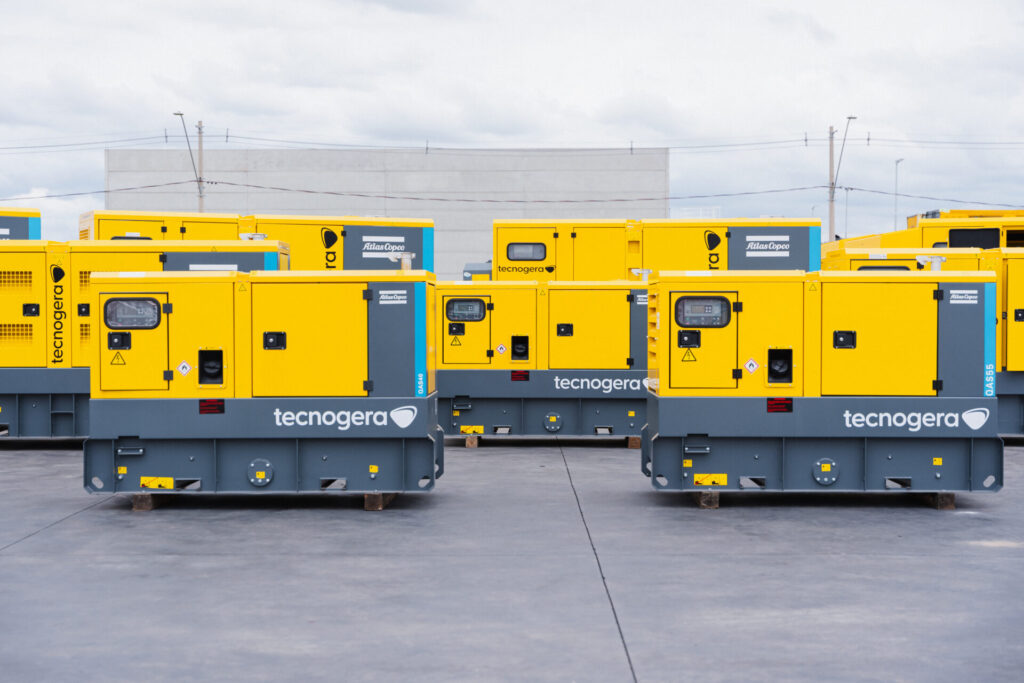
An enclosed generator is a power generation equipment featuring a metal structure internally lined with thermoacoustic foam, significantly reducing operational noise. Its features include weather protection, noise levels between 75-85 decibels, and easy maintenance through side doors. It’s ideal for hospitals, schools, libraries, hotels, and environments requiring low noise levels. Tecnogera offers modern and economical enclosed generator sets with comprehensive service.
How does a manual power generator work?
The manual power generator is equipment that ensures convenience and safety in various environments with simple operation, ready to be activated at any time during power outages. Its operation is straightforward, activated by a crank or device that creates tension between internal motors, converting mechanical energy into electrical energy. It requires preventive and corrective maintenance by specialized companies.
150 kVA Power Generator – Where Can It Be Used?
A power generator is a device capable of generating and supplying electrical power, making it highly recommended for blackouts and power outages. There are different models of generators, each with a specific power output for a particular segment, such as the 150 kVA model, which offers high durability and can power commercial and industrial establishments for up to 9 continuous hours.
Three-phase generator: what it is, how it works, and how to choose
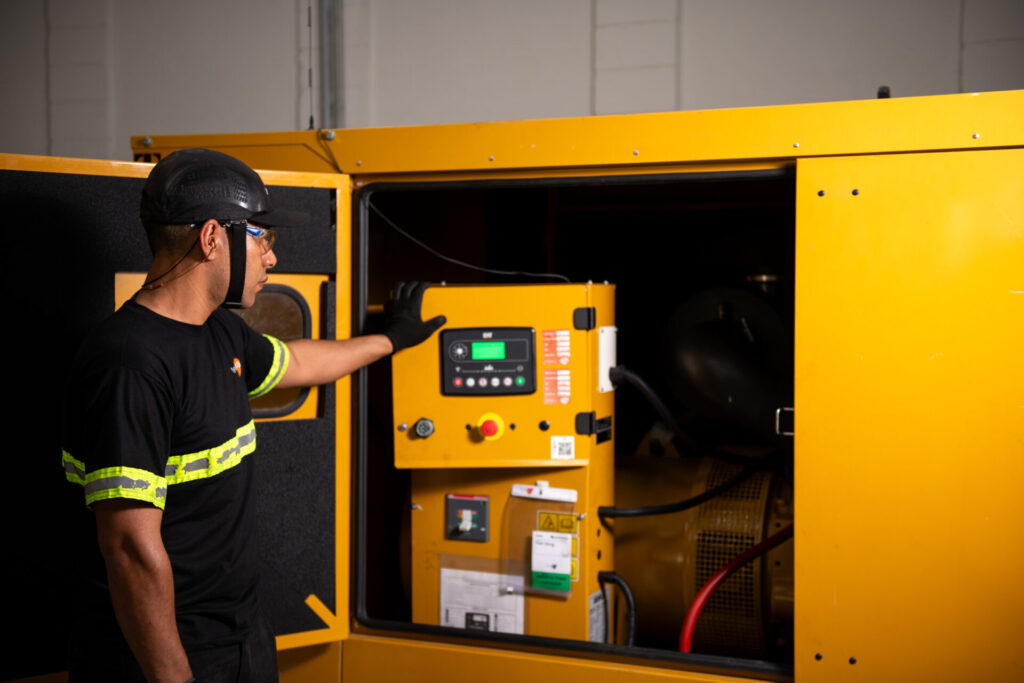
Unlike household equipment that uses single-phase voltage, most power generators (as well as other large equipment) use three-phase voltage to support their operation and offer the best conditions. A three-phase generator has three power wires (phase A, B, and V) plus the neutral, with three single-phase waves working together. Differentials include less need for copper/aluminum, smaller engines with independent start, constant torque, and less vibration, resulting in constant instantaneous power.